Walking Holidays From a UK Cottage Base: How to Choose a Cottage for Walkers
A walking holiday from a cottage base is one of the simplest pleasures in the British countryside: the same front door every morning, a different walk every day, and a warm room to come back to. This guide explains how to choose a cottage that actually works for walkers, rather than one that merely looks pretty in photographs.
The advice here is about choosing the cottage, not listing properties. If you are new to self-catering, start with our self-catering accommodation guide, which explains what is included and what to bring. If one famous walk is your whole reason for going, our Pen-y-Ghent guide shows how a single route fits into a cottage stay.
What a Walking Holiday From One Base Actually Looks Like
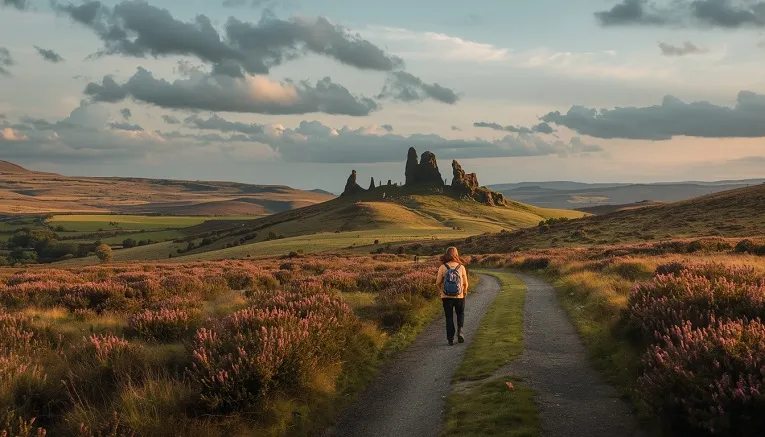
A walking holiday from one base means staying in the same cottage for the whole trip and walking a different route each day. Some days you walk straight from the front door; other days you drive to a trailhead, walk a circular route, and drive back for tea. The pattern suits most walkers better than a point-to-point walk, because you only unpack once, and a tired day costs you nothing: you simply choose a shorter walk, or none at all.
The alternative is a point-to-point walk, where you move along a long-distance trail and sleep somewhere different each night. That suits a named trail walked end to end, such as the Pennine Way or the Coast to Coast, but it means carrying everything and booking every night. For a first walking holiday, or one with children or a dog, one base is the easier and cheaper way to start, and you can still walk sections of a great trail by driving to a different section each day.
Walks From the Door: The First Thing to Check
The single most important question about a walking cottage is also the one listings answer worst: can you walk from the door? A cottage can sit in beautiful walking country and still need a car for every walk, because the nearest footpath is a twenty-minute walk along a lane with no pavement. Start with the map, not the photographs: ten minutes with a large-scale map tells you more about a cottage as a walking base than an hour of scrolling through pictures.
Get hold of a 1:25,000 walking map for the area and find the cottage on it; your local authority also publishes a rights of way map online, the definitive record of public footpaths. Ask three questions. How far is it from the door to the first footpath? Under a few hundred metres is ideal, and anything over a kilometre starts to feel like a commute, especially in the rain. Are there alternative routes from the door? Two or three options in different directions will carry a week-long stay comfortably. And is there a pub within a twenty to thirty minute walk, without a busy road in the dark? Maps do not show drainage, so ask the owner about the ground underfoot in your season before you pay a deposit.
The Cottage Features Walkers Actually Need
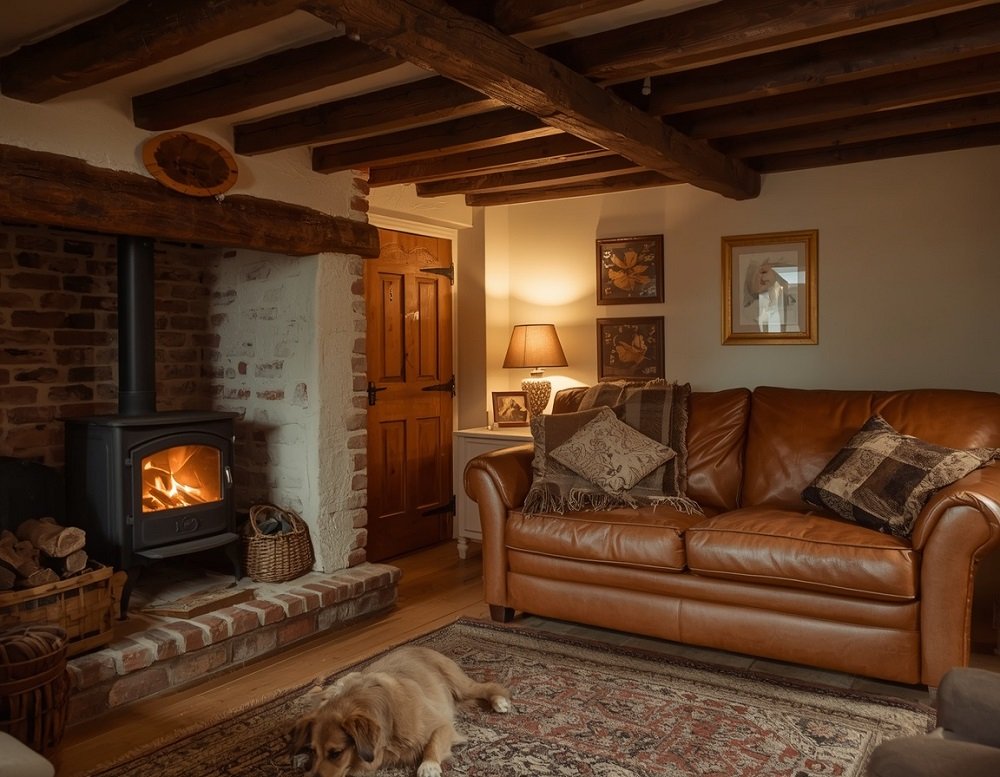
Once the location stacks up, a handful of practical features turn a pleasant cottage into a genuinely useful walking base: a boot room or back porch with a hard floor, so wet kit does not have to cross a carpet; heating that dries things, such as a radiator you can hang a coat near, a drying cupboard, or a log burner with space beside it; a hose or outside tap for rinsing boots and muddy paws; space to spread a map, with a decent table and good lighting; and storage for walking gear, so rucksacks and poles have a home rather than a pile by the door.
The kitchen matters more on a walking holiday than on most cottage stays, because walkers eat like walkers: a proper cooker, a big fridge, and a freezer beat a pretty kitchen every time. A bath is worth asking about too, since a deep bath after a long day on the fells is the difference between a good evening and a stiff one. So is a washing machine, since a week of walking produces a week of muddy clothes. None of these features appears in the headline photographs, so ask the owner about anything the listing does not mention.
One Base or Moving Along a Trail?
If your heart is set on a named long-distance trail, you have two ways to walk it from a cottage. Stay in one cottage near the middle of a section and walk out and back, or drive to a different start each day; this works well for the Cotswold Way, the Cleveland Way, and the South West Coast Path, where villages and parking are frequent. Or book two or three cottages along the route, which makes sense on longer trails, where a single base cannot reach every section without long drives. Choose the pattern before you choose the cottage: a single base suits circular walks and rest days, while moving along a trail suits walkers who want to cover ground. Either way, check where you will park, how you will get back to the car after a linear walk, and whether a bus or taxi runs when you need it. In remote areas the bus may run twice a day or not at all. A circular walk from the door never has that problem.
Best Regions for a Walking Cottage Holiday

Britain is spoilt for walking country, but a few regions suit a cottage-based walking holiday better than the rest, because they combine dense path networks with villages that have pubs, shops, and parking. The Yorkshire Dales is the classic choice: limestone scenery, waterfalls, and village-based walking, with Malham, Settle, Hawes, and Grassington all making good bases. Our Yorkshire Dales area guide compares the villages.
The Lake District offers fell and valley walks, and Keswick, Ambleside, and Grasmere are the most practical bases for first-timers. Our Lake District guide covers where to stay first time. Dartmoor suits walkers who like open moor, granite tors, and big skies, and our Dartmoor villages guide covers the bases on the moor’s edge. The Cotswolds suit gentler walking between honey-stone villages, and our Cotswold villages guide compares the best bases. Wales offers three very different kinds of walking in one country, covered in our Wales comparison guide. For coastal walking, see our Cornwall coastal bases guide and our coastal cottage guide.
National Trails Worth Building a Cottage Break Around
England and Wales have 16 National Trails, long-distance routes that are waymarked and maintained to a national standard, visited more than 83 million times a year. A cottage near one of them gives you a ready-made walking plan for the whole week. You do not need to walk the whole trail: a cottage near a good section is enough.
The South West Coast Path is the longest, at over 630 miles, with the Cornwall section alone covering over 300 miles. The Pennine Way is the hardest, at around 268 miles along the spine of England. The Coast to Coast runs about 190 miles from St Bees to Robin Hood’s Bay and became a National Trail in March 2026, which means better waymarking and maintenance. The Cotswold Way runs about 102 miles from Chipping Campden to Bath, the Cleveland Way about 109 miles from Helmsley to Filey, the Pembrokeshire Coast Path 186 miles around the Welsh coast, Hadrian’s Wall Path about 84 miles, and the South Downs Way about 100 miles from Winchester to Eastbourne. The Dales Way, at about 78 miles, is a favourite that is not officially a National Trail.
How Many Days, and How Far Each Day?
Three to four nights works well for a first walking break, and five to seven nights for a proper walking week in one region. Short breaks suit a single area with walks from the door, while a longer stay suits several valleys or trail sections. Many cottages ask for a full week in peak season, so check the minimum stay before you fall in love with a place.
Daily distance is the number most walkers get wrong. Fit walkers on flat ground can cover fifteen miles, but the same walkers on a hilly fell route will be tired at eight. Plan by time and height gain, not by miles alone, and build in a rest day in the middle of a week. A good rule is to plan one long day, one medium day, and one short day, then repeat, with a wet-weather alternative for each. If you are walking with children, halve the adult distance and double the snack stops. For the full picture, see our UK cottage holiday cost guide.
Walking With Dogs From a Cottage Base
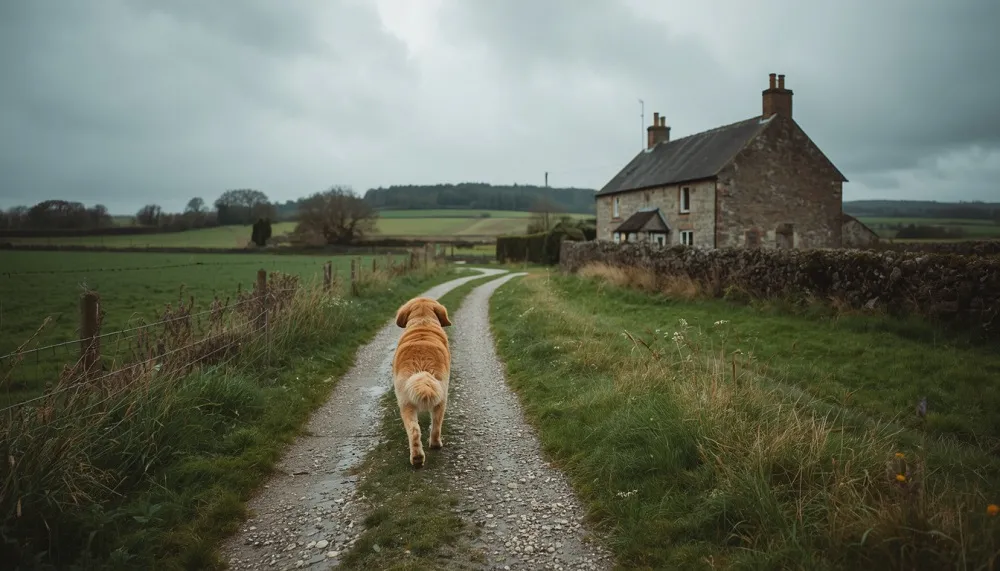
Dogs make walking holidays better and slightly more complicated. The cottage needs the same checks as any dog-friendly stay: how many dogs are accepted, whether there is a pet fee, and whether the garden is enclosed and secure. On Dartmoor and other open moorland, dogs must be kept under control around livestock, and on many farms that means on a lead. On farmland, fields of sheep or cattle mean a lead and a short rein, and on coastal paths, cliff edges deserve respect.
Pack for the dog as carefully as for yourself: water, a bowl, a long lead, a towel for every walk, and a first-aid basics kit. Check whether the cottage has a hose or outside tap for muddy paws, and whether the local pub welcomes dogs after the walk. Our dog-friendly cottage guide covers the questions to ask before you book, and our Dartmoor dog guide covers moor walking rules in detail.
What to Pack for a Walking Cottage Stay
Pack for the walk and for the cottage, and the two lists are different. For the walk, the essentials are waterproofs, layers, sturdy boots that are already broken in, a map and compass or a charged phone with offline maps, water, food, sun protection, and a small first-aid kit. Never start a walking holiday in new boots: break them in at home first.
For the cottage, the essentials are the ones walkers forget: a second pair of shoes for the evening, blister plasters, a drying line or a few pegs, a laundry bag for muddy kit, and a flask for tea on the hill. Bring your own walking maps and guidebooks, and download offline maps before you go, because mobile signal is patchy in valleys and on the moors. Our cottage kitchen essentials guide lists what is usually already in a cottage kitchen.
When to Go: Seasons, Mud and Daylight
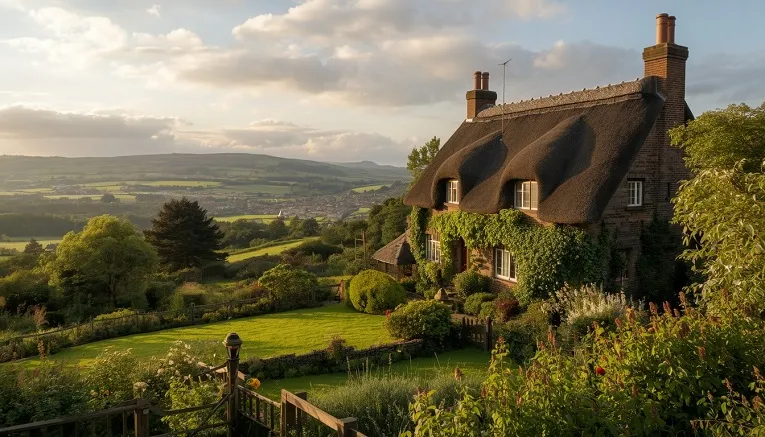
Late spring and early autumn are the best seasons for a walking cottage holiday: long daylight, settled weather, and dry paths. Summer brings the longest days and the busiest paths, so start before ten in the morning or choose a quieter valley. Winter walking is quiet and beautiful, but the days are short and the ground is wet, so plan shorter routes and carry a head torch.
Mud is a season in itself on British paths. Low-lying field paths and clay soils hold water for weeks after rain, while chalk, limestone, and moorland drain faster. If your dates fall in the wettest months, choose a base with hard-surfaced paths nearby, and ask the owner which routes stay passable. See our guide to when to book a UK cottage holiday for the cheapest months and booking lead times.
A Quick Checklist Before You Book
Use this checklist on every walking cottage before you pay a deposit. First, the walks: is there a footpath within a few hundred metres of the door, with two or three routes in different directions? Second, the cottage: is there a boot room or porch with a hard floor, heating that dries kit, a bath, a washing machine, and an outside tap? Third, the practical details: where will you park, is there a shop and a pub within walking distance, and what is the mobile signal like? Fourth, the party: does it suit dogs, children, and anyone with limited mobility?
Fifth, the booking terms: minimum stay, changeover day, cleaning and linen charges, pet fees, deposit, and cancellation terms. Sixth, the season: are the paths passable on your dates, and is there a wet-weather plan? If the listing answers all six, you have found a cottage worth booking. If it answers none of them, ask the owner directly.
Frequently Asked Questions
Can you walk a National Trail from one cottage?
Yes, in sections. Stay near a good stretch of the trail and drive to a different start each day, or walk out and back from the door. You do not need to walk the whole trail, or move beds every night, to enjoy it.
Do I need a car for a walking cottage holiday?
Usually, yes. A cottage with walks from the door can work without a car for a short break, but reaching trailheads, shops, and pubs is far easier with one.
What if it rains all week?
Choose a cottage with a drying space, a bath, and a log burner, and plan shorter walks with a pub at the end. A rainy week in a cottage that dries kit properly is a good holiday.
Are walking holidays good for beginners?
Yes, if you choose the right base. Start with gentle, well-marked routes such as the Cotswold Way or the Dales Way, plan short days, and build in a rest day. A cottage base lets you shorten any walk without losing your bed for the night.
Can I walk with children from a cottage base?
Yes. Choose a base with short circular walks and a pub that welcomes families. Halve the adult distance, double the snack stops, and let the children choose one walk each.
A walking holiday from a cottage base works when the cottage fits the walking: paths from the door, a place to dry wet kit, and a warm room at the end of the day. Check the six points above, ask the owner the questions the listing does not answer, and the walking will take care of itself.