Cotswold Cottage Holiday: Best Villages to Stay In as a Base
The Cotswolds are easy to fall in love with and surprisingly easy to get wrong as a cottage holiday. The photographs all look similar, honey coloured stone, a village green, a pub with a fire, yet the experience of staying in one village can feel very different from staying in another. One base gives you a shop, a pub and a bus stop within a short walk. Another gives you a beautiful lane and a long drive for milk. Both can be lovely, but only one will suit the break you actually planned. This guide is about choosing a base, not about listing every pretty village in the region. It explains what makes a good Cotswold cottage base, compares the main bases by traveller type, and gives you a practical checklist to use before you book.
The Cotswolds are a large protected landscape, not a single village or a small cluster of villages. The Cotswolds National Landscape was designated as an Area of Outstanding Natural Beauty in 1966 and extended in 1990, and at about 787 square miles it is the largest Area of Outstanding Natural Beauty in England. It stretches from the north, around Chipping Campden and Broadway, through Gloucestershire and Oxfordshire, to Bath and Wiltshire in the south. That size is the first reason base selection matters. A cottage in the north Cotswolds and a cottage in the south Cotswolds can be more than an hour apart by road, so a base chosen for one end of the region will not serve the other end well. Choose your end of the Cotswolds first, then choose your village inside it.
A second point matters for cottage guests in particular. A Cotswold cottage holiday is a self-catering stay, so the base has to work as a place to live for a few days, not just as a place to photograph. Our self-catering accommodation guide explains what self-catering usually includes and what you should check before you arrive. In the Cotswolds, that practical test is sharper than usual, because many of the prettiest villages have limited shops, limited parking and limited public transport. The prettiest cottage in the prettiest village can still be the wrong cottage if the practical details do not fit your party, your car situation and your plans for evenings and food shopping.
What Makes a Good Cotswold Cottage Base
A good base does three jobs at once. First, it puts you within easy reach of the villages and walks you actually want, without a long drive at the start and end of every day. Second, it gives you somewhere to eat, shop and walk in the evening without getting back in the car. Third, it gives the cottage itself a setting that suits your party, with parking, outdoor space and a layout that works for the people and dogs travelling with you. If a base fails one of those three jobs, the holiday still works, but it takes more effort every day, and that effort adds up over a week.
Location inside the region is the first test. The north Cotswolds, around Chipping Campden, Broadway, Stow-on-the-Wold and Bourton-on-the-Water, suit a classic first visit, because the famous villages sit close together and day trips are short. The central Cotswolds, around Burford and the Windrush valley, suit visitors who want a quieter centre with good road links in several directions. The south Cotswolds, around Cirencester, Painswick and the Stroud valleys, suit visitors who want a larger town, more independent shops and a base that also works for Bath and the southern villages. None of these is better in itself. The right one is the one that matches the villages on your own list.
The second test is what you can reach on foot. A cottage with a pub, a shop and a walk from the door changes a self-catering break, because arrival day, rainy days and evenings all become easier. You can eat out without driving, you can buy breakfast supplies without a car trip, and you can take a short evening walk without planning a route. A cottage a few miles outside a village can be quieter and larger, but it trades that convenience for car dependence. If you are travelling without a car, or if you want car free days, the on foot test should come before the cottage photographs in your decision.
The third test is the cottage itself, and it is the one most often skipped. Ask about parking, and whether the parking space is reserved for your cottage or shared. Ask whether the cottage has a garden, and whether that garden is enclosed if you are travelling with a dog or young children. Ask about stairs, bathrooms and living space, especially for a larger party, and ask what is included for self-catering, from linen and towels to kitchen equipment. A honey stone exterior tells you nothing about any of these, and these are the details that decide whether a base feels easy or awkward after the first day.
Best Bases by Traveller Type: First-Time Visitors, Couples, Families and Walkers
For a first visit, Stow-on-the-Wold is hard to beat as a central base. It is a market town rather than a tiny village, so it has shops, pubs, restaurants and places to stay, and it sits centrally for the north and central villages, including Bourton-on-the-Water, the Slaughters and Burford. First-time visitors often want a base where they can see a lot without long drives, and where an evening out does not need a plan. Stow gives you that, with the trade that it is popular and can feel busy at peak times. If you want a first visit with a slightly quieter feel, Moreton-in-Marsh is a practical alternative, with a station and good bus links, and a more working town atmosphere than the honeypot villages.
For couples, Chipping Campden and Broadway suit different kinds of romantic break. Chipping Campden is calm, elegant and compact, with a long high street, a historic market hall and walks that start close to the town. It suits couples who want quiet evenings, good food and a base that feels special without feeling crowded. Broadway suits couples who want a grander high street, a wider choice of places to eat and stay, and easy access to Broadway Tower and the northern walks. Both work well for a cottage with a log burner or a hot tub, and our cottage with a hot tub guide explains what to check before you pay extra for a hot tub, because private and shared tubs are very different.
For families, Bourton-on-the-Water and Burford deserve a close look, for different reasons. Bourton-on-the-Water is the most visited village in this guide, and that popularity is both its strength and its weakness. Families get attractions, places to eat, a river walk and a lively atmosphere, all within a short walk, but they also get crowds at midday in school holidays and parking pressure on fine weekends. Burford is a better family base if you want a proper high street, a range of shops and pubs, and a central position for day trips, without the same midday crowds. Whichever you choose, check the cottage for family details that matter more than the village name, such as a safe garden, a bath as well as a shower, a washing machine and space for a travel cot or high chair if you need them.
For walkers, the best base depends on the walking you want. Chipping Campden is the traditional northern start for the Cotswold Way, and it suits walkers who want a long distance trail on the doorstep. The Slaughters and the Windrush valley suit walkers who want short, pretty village to village walks with a pub at the end. Cirencester suits walkers who want a larger town base with a choice of valley walks and a good range of places to eat after a long day. In every case, check the walk from the cottage itself, not just the walk from the village car park. A cottage described as near a trail can still be a drive from the trailhead, and that detail matters on a walking holiday.

Bourton, Stow, Burford, Broadway, Chipping Campden and Cirencester Compared
Bourton-on-the-Water is the classic Cotswold village base, built around the River Windrush, with low bridges, tea rooms, pubs and attractions close together. It is the best choice in this list for a short, lively family break where everything is on foot, and it is the weakest choice if you want quiet, because it is the village most day visitors head for first. Staying in Bourton works best if you enjoy the village early in the morning and in the evening, when day visitors have left, and if you accept that midday in peak season will be busy. For a cottage base, check parking carefully, because a cottage in the centre of Bourton without reserved parking can mean a daily search for a space.
Stow-on-the-Wold is the most balanced base in this comparison. It is a market town on a hill, with a market square, antique shops, pubs and restaurants, and it sits centrally for the north and central Cotswolds. It suits first-time visitors, couples and families who want choice without choosing a honeypot village. The trade is that Stow is less intimate than a small village, and some visitors find the hill and the town centre less peaceful than a lane outside a village. As a cottage base, Stow usually gives you better shop and restaurant choice on foot than a village, and a wider range of cottage sizes, which matters for larger parties.
Burford is a gateway town on the western edge of the Cotswolds, with a long high street running down a hill, a medieval church, antique shops and a good range of pubs and places to eat. It suits visitors who want a central base for the Windrush valley, the Slaughters and Bibury, and who also want easy road links towards Oxford and the south. Burford feels like a working town as well as a visitor town, which many cottage guests prefer for a week long stay, because shops and services are there for residents as well as visitors. Check the hill if mobility matters, because the high street is steep, and a cottage at the top and a cottage at the bottom can feel very different for walking to shops.
Broadway is the grandest base in this list, with a wide high street, honey stone buildings, a strong food scene and easy access to Broadway Tower and the northern escarpment walks. It suits couples, special occasions and visitors who want a polished base with a choice of places to eat, and it works well as a northern base for Chipping Campden, Snowshill and Stanton. The trade is price and popularity. Broadway cottages often sit at the higher end of the market, and the village is popular with day visitors, so a cottage with parking and a quieter side street or lane can be worth more here than a cottage on the main high street itself.
Chipping Campden is the quietest classic base in this comparison, and for many walkers and couples it is the best. Its high street is long, elegant and largely unspoiled, with a market hall, a church and a good range of pubs and independent shops, yet it feels calmer than Bourton or Broadway, especially in the evening. It suits a slower break, a walking break and a romantic break, and it is a strong base for the northern villages and the start of the Cotswold Way. The trade is facilities. Chipping Campden has fewer shops and services than Stow, Burford or Cirencester, so check shop opening times and plan food shopping, especially for a longer stay or a stay over a public holiday.
Cirencester is the largest base in this list, and the most practical for a longer stay or a southern Cotswolds break. As a market town with a Roman history, it has a wide range of shops, supermarkets, pubs, restaurants and services, plus good road links to Painswick, Bibury, the Coln valley and the Stroud valleys. It suits families who need a supermarket, visitors who want a town base rather than a village base, and anyone combining the Cotswolds with Bath or the south. The trade is atmosphere. Cirencester feels like a town, not a honeypot village, so if your main reason for coming is a picture perfect village lane outside your cottage door, a smaller village base will suit you better, with Cirencester as a day trip instead.
Village Cottages vs Market Town Cottages: Which Suits Your Break
A village cottage gives you the Cotswolds at its most photogenic. You step out of the door into a lane, a green or a river walk, and the evening feels quiet and rural. That setting suits couples, walkers and visitors who want to slow down, and it suits a short break where you plan to eat out and walk locally. The limits are practical. A village cottage may have a small shop or no shop at all, a pub that closes early or is closed on some weekdays, limited parking and a garden that is smaller or shared. If you need a supermarket, a pharmacy or a vet, you will drive for it, and in peak season that drive can take longer than expected.
A market town cottage gives you choice and convenience. Stow, Burford, Cirencester and Moreton-in-Marsh all offer a range of shops, pubs and restaurants on foot, plus services that a village cannot support. That choice matters for a week long stay, for a larger party, for families with children who need supplies, and for visitors who want to eat out on several evenings without driving. The trade is that a market town cottage may feel less like a rural escape, and the cottage itself may be a town house rather than a detached stone cottage with a large garden. If a large garden and a rural lane matter more to you than shops on foot, a village cottage will still be the better choice.
There is also a middle option that many experienced cottage guests choose, which is a village edge or hamlet cottage a short drive from a market town. This gives you quiet and space, plus town facilities within ten to fifteen minutes by car, and it can be the best of both worlds if you are happy to drive for shopping and evenings out. The key question is honest: how many car trips are you happy to make each day? If the answer is none, choose a town or a village with a shop and a pub on foot. If the answer is one or two, a hamlet cottage can work beautifully. If you are travelling without a car, do not choose a hamlet cottage at all, and check bus times for your travel dates before you book, because rural bus services vary by day and season.

Cost and Seasonality: What a Cotswold Cottage Holiday Usually Costs
Cotswold cottages are not priced as one market. A small two person cottage in a quiet village, a large family cottage in Stow and a luxury cottage with a hot tub in Broadway can sit in very different price bands in the same week, for reasons that have nothing to do with quality. Location, size, features, garden and parking all affect price, and so does the season. School holidays, Easter, summer weekends and Christmas are the peak periods, when the best cottages book earliest and prices are highest. Shoulder season, in late spring and early autumn, often gives a better balance of price, daylight and quieter villages, while winter gives the lowest prices and the quietest villages, with shorter days and a greater need for heating and a log burner.
Treat every price you see as indicative only, and verify the exact total with the provider before you book. Our cottage holiday cost guide explains the ranges by region, size and season, and the hidden extras that catch people out, such as cleaning charges, pet fees, linen charges, deposits and charges for logs or heating. In the Cotswolds, the extras to check are parking, if it is charged separately, linen and towel inclusion, pet fees if you are travelling with a dog, and any charge for a hot tub or for extra guests. A cottage that looks cheaper on the headline price can cost more once those extras are added, so compare the total for your party and your dates, not just the nightly headline.
Booking timing also affects cost in the Cotswolds, because the most popular villages and the largest cottages book well ahead for peak weeks. If you need a specific village, a specific week in school holidays, or a cottage that sleeps eight or more, booking early is usually the safer choice, even if the price is higher. If you are flexible on village and dates, a shoulder season break or a midweek short break can offer better value, and a last minute cottage can sometimes be available outside peak periods. Our when to book a cottage holiday guide explains lead times, cheapest months and short break rules in more detail, so you can match your booking timing to your budget rather than guessing.
Parking, Pubs and Shops on Foot: The Practical Checks That Decide a Base
Parking is the single most practical check for a Cotswold cottage base, and it is the check most often missed. Many Cotswold villages have narrow lanes, limited on street parking and car parks that fill on fine weekends. A cottage with reserved parking, a driveway or a garage removes a daily worry, especially for a family or for a stay in Bourton-on-the-Water or Broadway in peak season. A cottage without parking can still work, but only if you know where you will park, how far the walk is with luggage, and whether parking is charged. Ask the provider directly, and do not assume that a cottage in a village has parking just because the photographs show a lane outside it.
Pubs and shops on foot are the second practical check. A village pub that welcomes walkers and dogs, a tea room for a rainy afternoon, a village shop for breakfast supplies and a farm shop for a special meal all change how a self-catering break feels. Check opening days as well as opening times, because some village pubs and shops close on certain weekdays or outside peak season, and a base that looks well served on a Saturday can feel quiet on a Monday. If you are travelling with a dog, check pub and cafe dog policies before you go, and see our dog-friendly cottage holidays guide for the garden, fee and rules checks that matter most for dog owners.
Shops deserve a separate check for a week long stay. A village shop is enough for breakfast, milk and a few essentials, but a larger party will usually need a supermarket trip, and that trip is easier from a market town base than from a small village. If your cottage is in a small village, find the nearest supermarket before you arrive, and plan one larger shop on arrival day rather than several small trips. The same planning applies to food for a dog, to baby supplies and to any medication or specialist food, because a small village shop may not stock them. A little planning here is what turns a pretty village into a practical base.
How to Choose Your Cotswold Cottage Base: A Short Checklist
Start with your end of the Cotswolds, not with a village name. List the villages you most want to visit, and choose a base that keeps most of them within a short drive. If your list is mostly northern villages, choose a northern base. If your list mixes north and south, choose a central base such as Burford or Stow, and accept that some days will be longer drives. If your list is mostly southern villages, choose Cirencester or a southern village base, rather than trying to cover the whole region from one northern cottage. A base that serves your list is better than a base that serves someone else’s photographs.
Next, match the base to your party. For a first visit, choose a market town with choice on foot. For a romantic break, choose a quiet village or a market town with good places to eat, and check the cottage for a log burner, a bath and a garden you can actually use. For a family break, choose a base with a shop, a pub and parking, and check the cottage for a bath, a washing machine and outdoor space. For a walking break, choose a base with walks from the door, and check the exact distance from the cottage to the trail, not just from the village. For a dog break, choose a base with a secure garden and dog friendly pubs, and check the garden boundary in the same way our dog-friendly Dartmoor guide explains for moor cottages, because the word enclosed is used in many different ways in listings.
Then check the cottage details that do not appear in the headline. Confirm parking, garden enclosure, stairs and bathrooms, linen and towel inclusion, kitchen equipment, heating and log burner fuel, pet fees and rules, and any extra charges. Confirm the total price for your party and your dates, and confirm the cancellation terms, because Cotswold cottages in peak season often have stricter terms than a hotel room. If you are booking a larger cottage, also check bedroom and bathroom ratios, because a cottage that sleeps eight with one bathroom will feel very different from a cottage that sleeps eight with three bathrooms. Our luxury cottage stay guide gives a useful standard for what to expect at the top end of the market, even if you are not booking a luxury cottage.
Finally, choose the village you will enjoy in the evening, not just the village you will photograph in the day. A cottage base is where you will eat breakfast, dry wet coats, plan the next day and spend rainy evenings. A village with a pub you like, a walk you enjoy and a shop that is open when you need it will give you a better holiday than a more famous village where you have to drive for every meal and every supply. The Cotswolds reward a base chosen for living, not just for looking, and that is the choice this guide is designed to help you make.
Frequently Asked Questions
What is the best village to stay in the Cotswolds for a first cottage holiday?
Stow-on-the-Wold is the safest first choice, because it is central, it has shops, pubs and restaurants on foot, and it keeps Bourton-on-the-Water, the Slaughters, Burford and the northern villages within a short drive. If you prefer a quieter first base, Moreton-in-Marsh is a practical alternative, with a station and a working town feel. Choose the base that serves the villages on your own list, not just the village with the most photographs.
Do I need a car for a Cotswold cottage holiday?
A car makes a Cotswold cottage holiday much easier, especially for a village cottage, a larger party or a stay that mixes several villages. It is possible to stay without a car, but you should choose a market town base with a station or good bus links, such as Moreton-in-Marsh, and check bus times and cottage location before you book. A hamlet cottage without a car is not a practical choice, however pretty it looks.
Is a village cottage or a market town cottage better for a family?
A market town cottage is usually easier for a family, because it gives you a shop, a supermarket trip, pubs and parking on foot, plus a wider choice of cottage sizes. A village cottage can be wonderful for a family if it has a safe garden, parking and a pub and shop within walking distance, but check those details before you book, because a village name alone does not guarantee them.
When is the cheapest time for a Cotswold cottage holiday?
Prices are usually lowest outside school holidays and peak weekends, with shoulder season in late spring and early autumn often giving the best balance of price, daylight and quieter villages. Winter can be cheapest of all, but days are short and heating matters more. Treat all prices as indicative, verify the total with the provider, and check hidden extras such as cleaning charges, pet fees and linen charges before you compare cottages.
What is a honey stone cottage?
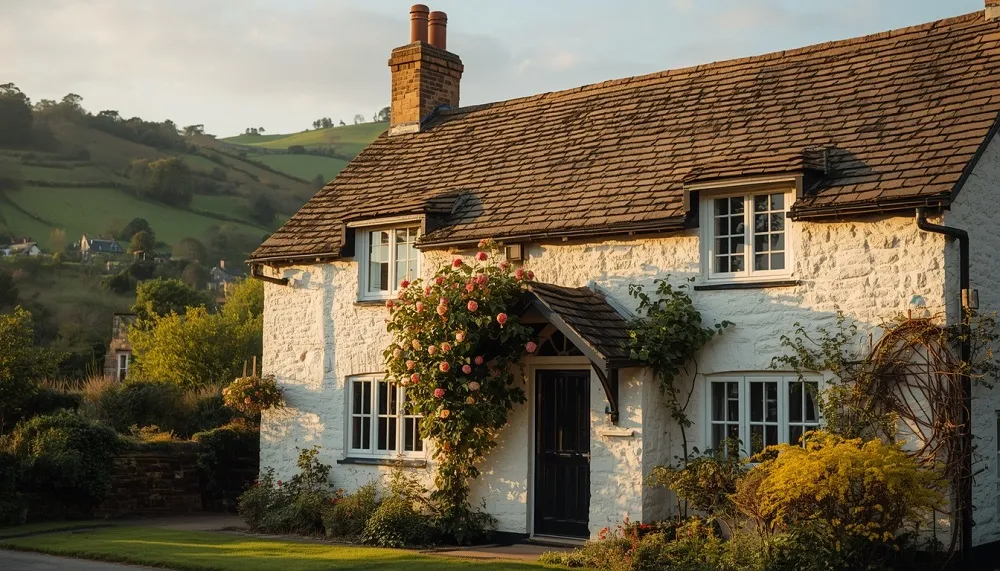
Honey stone is the warm, honey coloured Jurassic limestone used to build many Cotswold cottages, houses, walls and churches. The stone changes colour across the region, from warm honey tones in the north to greyer tones around Stroud and paler creams towards Bath, which is one reason villages in different parts of the Cotswolds can look and feel different even when the building style is similar. A honey stone exterior is a sign of a traditional Cotswold cottage, but it tells you nothing about parking, garden, layout or what is included, so check those separately.
The best Cotswold cottage base is not the most famous village, and it is not the prettiest cottage in the photographs. It is the base that lets you live well for a few days, with villages you want within a short drive, a pub and a shop you can walk to, parking you do not have to search for, and a cottage whose garden, layout and self-catering details fit your party. Choose your end of the Cotswolds first, match the base to your party, check parking and what is included, and the villages themselves will take care of the rest.