
Self-Catering vs Bed and Breakfast: Differences Explained
If you are planning a UK break and you have narrowed it down to a cottage or a bed and breakfast, you have already made the hardest choice, which is to stay somewhere small and personal rather than a chain hotel. What remains is a genuinely different kind of holiday. A self-catering cottage gives you a whole house, a kitchen and a front door of your own. A bed and breakfast gives you a room in someone else’s home, a cooked breakfast in the morning and a host who knows the area. Both can be excellent, and both can be the wrong choice, so this guide works through the differences one by one, space, food, cost, freedom and who each one suits, so you can book with confidence rather than guesswork.
The short answer is that self-catering suits longer stays, families, groups and anyone who wants to set their own timetable, while a bed and breakfast suits short stays, couples and walkers who want to arrive, sleep, eat well and leave without thinking about shopping or cooking. If you are new to self-catering, start with our self-catering accommodation guide, which explains what is normally included in a cottage stay and what to bring, and read our guide to how much a UK cottage holiday costs before you compare prices, since the figures in this article are indicative and every price should be verified with the provider.
What Self-Catering Actually Means
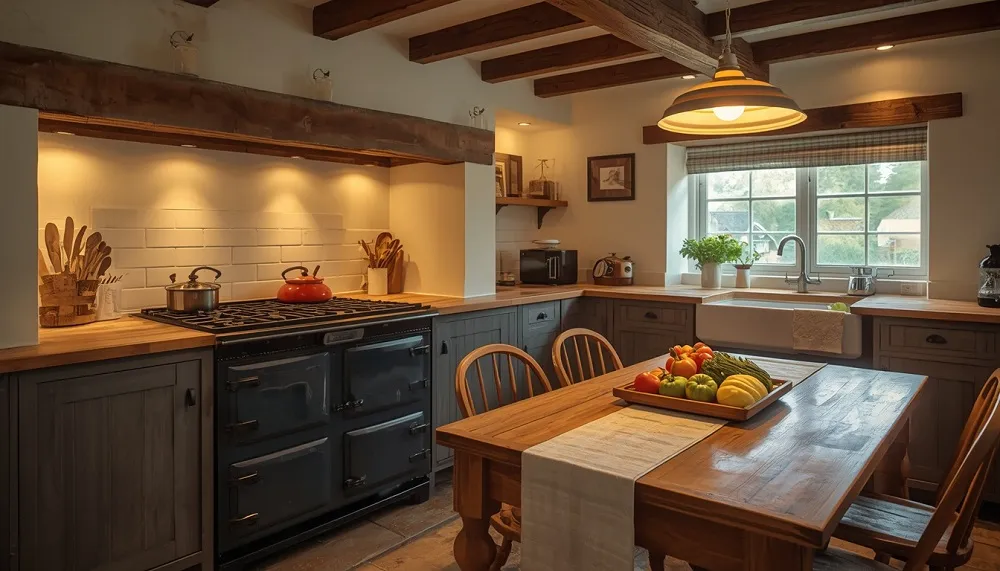
Self-catering means you rent a whole property, usually a cottage, and you look after your own meals. The property comes with a kitchen, a living room, bedrooms and usually a garden, and you are free to cook, eat out, order a takeaway or mix all three. Linen and towels are usually provided, heating is included, and a washing machine is common, but the details vary from property to property, so the listing is the document that matters. Our self-catering guide covers the included and not included questions in full, including the towels and bedding question that catches first-time guests out.
The defining feature is independence. There is no host on site, no set meal times and no one else in the building. You arrive, collect the key from a lockbox or the owner, and the place is yours until you leave. That freedom is the whole point of a cottage holiday, and it is also the reason cottages suit people who like to plan their own days. You can eat at ten in the morning, walk in with wet coats, light the fire and let the evening sprawl, and nobody will mind. The trade-off is that you do the shopping, the cooking and the washing up, and a cottage stay asks more of you than a hosted stay does.
Self-catering also changes how a stay is priced. You pay for the whole property, not per person, so the cost per head falls as the party grows. A cottage that sleeps six costs the same whether two people stay in it or six, which is why cottages are such good value for families and groups, and such poor value for a solo traveller who only needs a bed. Minimum stays are common, often three nights with a Friday or Monday changeover, and our guide to the best time to book a UK cottage holiday explains the short-break rules and the cheapest months to travel.
What a Bed and Breakfast Actually Means
A bed and breakfast is a small, privately owned place to stay, usually a family home, a converted farmhouse or a purpose-built guest house, that offers overnight lodging and a cooked breakfast in the morning. Under the common British grading standards used by Visit Wales and the AA, a bed and breakfast is run by the owner in a private house and takes no more than six paying guests. Anything larger, run on a more commercial basis and often with staff and an evening meal, is graded as a guesthouse rather than a bed and breakfast. That six-guest limit is the simplest way to tell the two apart, and it explains why a bed and breakfast feels like staying in someone’s home.
The breakfast is not a token extra. A graded bed and breakfast must serve a cooked breakfast or a substantial continental one, and the owner or a member of staff must be on hand at arrival, at departure and at meal times. In practice that means a proper cooked breakfast, often with local ingredients, served at a set time, usually in a dining room you share with the other guests. If you want a different breakfast, or you need to eat early to catch a walk or a train, tell the host the night before, because the kitchen runs to a timetable and the food is cooked to order.
The second defining feature is the host. The owner lives on the premises, greets you on arrival, shows you the room, hands over the Wi-Fi password and tells you where to eat and what to see. That local knowledge is a real part of what you are paying for, and it is the reason bed and breakfasts suit first-time visitors to an area so well. The trade-off is privacy. You are a guest in someone’s home, so there are shared spaces, a breakfast table with strangers, and house rules about noise, arrival times and dogs that you would never meet in a cottage of your own.
Space and Privacy: A Whole House vs a Room

Space is where the two options differ most. A self-catering cottage gives you a living room, a kitchen, separate bedrooms and usually a garden, all behind one front door. A family can eat at a table, a teenager can close a bedroom door, and a toddler can nap in a quiet room while the rest of the family carries on with the day. A bed and breakfast gives you a bedroom, usually with an en-suite bathroom, and shared use of a lounge and a dining room. It is comfortable, but it is one room, and everything you do happens in it or in shared space.
Privacy follows the same pattern. In a cottage there are no shared corridors, no neighbours through a thin wall and no need to keep children quiet in case the room next door complains. In a bed and breakfast you share the house with the host and a handful of other guests, you eat breakfast at a communal table, and you come and go through a front door that belongs to someone else. Some guests love that social side, and the breakfast table is where many of the best local tips are passed on, but if you want to be left alone, a cottage is the better choice.
Party size decides this question for most people. A bed and breakfast suits one or two people, and at most a small family in one or two rooms, because most properties have between two and six guest rooms. A family of five or six, or a group of friends, needs either several rooms across one or two bed and breakfasts, or one cottage, and the cottage is almost always cheaper and calmer. Our guide to large and family cottage holidays explains how cottages that sleep ten or twelve give each generation its own room, which no bed and breakfast can match.
Food: Cooking for Yourself vs Breakfast Cooked for You
Food is the heart of the difference, and it is worth thinking about honestly before you book. In a bed and breakfast, breakfast is cooked for you and included in the price, lunch and dinner are your own problem, and you will eat out, buy a sandwich or cook nothing at all, because there is no kitchen to cook in. That suits people who want to be fed in the morning and free for the rest of the day, and it suits walkers and sightseers who are out all day and only need a bed at night.
In a self-catering cottage, every meal is your choice. You can cook a proper dinner, keep milk for morning coffee, pack a flask before a walk and feed a fussy eater exactly what they will eat, at whatever time they are hungry. You can also eat out every night if you want to, or order a takeaway, because having a kitchen does not oblige you to use it. What self-catering really provides is flexibility, and that flexibility is worth the most to families with dietary requirements, allergies, weaning babies or children who will only eat pasta. None of those are insurmountable in a bed and breakfast, but each one costs money or patience, and over a week the cost is real.
The cost of food is where the comparison is decided. A bed and breakfast price includes breakfast, which is good value, but lunch and dinner for a family of four in restaurants or pubs can easily cost 40 to 60 pounds a day, and that adds up fast over a week. A self-catering shop for the same family typically costs far less if you shop before you travel, and the saving is the difference between a cottage that looks expensive and a bed and breakfast that turns out to be expensive. If your party would eat out every night regardless, the difference narrows, because a good pub dinner costs much the same wherever you sleep. If you would cook, it does not narrow at all.
Cost Compared: Per Room vs Per Property

The only honest way to compare the two is to compare the whole trip for the whole party, not the nightly rate on the listing. A bed and breakfast charges per room per night, with breakfast included, and the price is usually for one or two adults sharing, with extra charges for extra guests. A cottage charges per property per night, with no food included, and the price is the same whether two people stay or six. The example below is illustrative only, not a quoted price, so verify real prices with the provider before you budget.
Take a couple staying three nights in the UK outside the school holidays. An indicative bed and breakfast room might cost 110 pounds a night, or 330 pounds for three nights, with a cooked breakfast included each morning. An indicative small cottage for the same three nights might cost 450 pounds, with no food included, so the bed and breakfast looks cheaper, and for a couple on a short break it usually is, once you add the food shop, the cleaning expectations and the fact that a cottage minimum stay can push a two-night weekend to three nights. Now take the same couple staying seven nights. The bed and breakfast costs 770 pounds with breakfasts, plus seven lunches and dinners eaten out. The cottage costs perhaps 900 pounds for the week, plus a food shop, and the gap closes or reverses, because the cottage price per night falls over a week while the bed and breakfast price stays flat.
Families change the maths completely. A family of four needs two bed and breakfast rooms, so the nightly cost doubles, while a cottage costs the same for four as for two, and the kitchen saves on meals as well. That is why our cottage versus hotel guide for families reaches the same conclusion: the longer the stay and the larger the party, the more the per-property pricing of a cottage wins, and the shorter the stay and the smaller the party, the more the per-room pricing of a bed and breakfast wins. Deposits differ too. Many bed and breakfasts ask for one night’s stay or a percentage of the total as a deposit, while cottages often ask for a larger deposit and a damage deposit, so check the terms before you book either one.
Freedom and Timetables: Your Own Schedule vs the Host’s
A cottage runs on your timetable. You can eat at midnight, come back at 2am, sleep until noon and cook at whatever hour suits you, because the place is yours. A bed and breakfast runs on the host’s timetable, and that timetable is reasonable but real. Check-in is usually from 3pm or 4pm, breakfast is served in a set window, often between 8am and 9am, and the host needs to know your arrival time in advance because there is no 24-hour reception desk. There is usually no curfew, and you can come and go as you please once you have the key, but the house is someone’s home, so late nights, noise and muddy boots are noticed in a way they never would be in a cottage.
That structure suits some travellers and frustrates others. Walkers and sightseers who are up early, out all day and back for dinner love the rhythm of a bed and breakfast, because breakfast is ready when they need it and the host has already told them which path to take. Families with babies, teenagers who sleep until noon, or anyone who wants a lie-in and a slow breakfast in their own kitchen will find the same rhythm restrictive. The question to ask yourself is simple: do you want a holiday that is organised for you, or a holiday that you organise yourself? Neither answer is wrong, but the two options give opposite answers.
Dogs sharpen the difference. Many bed and breakfasts accept dogs, but usually with conditions: the dog must not be left alone in the room, must not join you at breakfast, and may be charged a fee per night. A cottage with an enclosed garden lets the dog out without a lead, a lift and a lobby, and the dog sleeps in the cottage with you. If you are bringing a dog, read our dog-friendly cottage holidays guide before you book, which covers enclosed gardens, pet fees and the rules that catch people out, and ask any bed and breakfast about its dog policy before you book, not after.
Who Each One Suits Best
A self-catering cottage suits a family staying a week, a group of friends sharing the cost, a multi-generational party that needs separate bedrooms and a living room of its own, a couple who want a slow week with a fire and a kitchen, and anyone travelling with a dog, a baby or a special diet. It also suits a stay where the cottage itself is part of the holiday, somewhere with a hot tub, a log burner or a garden to sit in, rather than just a base for sleeping. If the cottage matters as much as the destination, read our cottage with a hot tub guide and our luxury cottage stay guide to see what features are worth paying for.
A bed and breakfast suits a couple on a two or three night break, a solo traveller who wants company and local advice, a walker who needs a good breakfast and an early start, and a first-time visitor to an area who would value a host’s recommendations.

