

Choosing a cottage holiday in Wales is not really one decision. It is three different holidays wearing the same country name. A stone cottage under the mountains of Eryri, known in English as Snowdonia, gives you a different week from a whitewashed cottage above a Pembrokeshire beach, and both differ again from a farmhouse cottage in the rolling hills of Bannau Brycheiniog, known in English as the Brecon Beacons. The scenery changes, the walking changes, the driving changes, and the kind of cottage that works best changes too. This guide compares the three regions side by side, so you can match the place you stay to the break you actually want, rather than picking Wales in general and hoping for the best.
Wales has three national parks, and each one anchors one of the regions in this guide. Eryri is the oldest and largest, the Pembrokeshire Coast is the only national park in the UK designated mainly for its coastline, and Bannau Brycheiniog is the rolling, waterfall-rich park of Mid and South Wales. If you are new to self-catering, start with our self-catering accommodation guide, which explains what is normally included in a cottage stay and what you need to bring. The advice below builds on that guide and stays focused on one question: which Welsh region should be your cottage base?
The Three Regions at a Glance
Eryri covers 823 square miles of north-west Wales, across Gwynedd and Conwy, and it holds Yr Wyddfa, at 1,085 metres the highest peak in Wales and England. It is a mountain landscape first: nine mountain ranges, glacial lakes, steep valleys, slate villages and a stretch of coast at its edges. A cottage here is a walking base, and the best days start on foot from the door or after a short drive to a trailhead.
Pembrokeshire is a coastal landscape first. Its national park runs along almost the whole coastline of the county, and the Pembrokeshire Coast Path, a National Trail of 186 miles, links beaches, cliff tops, harbours and small towns from St Dogmaels in the north to Amroth in the south. A cottage here is a beach and coast-path base, and the best days mix a walk with a swim, a harbour lunch and a beach evening.
Bannau Brycheiniog covers 520 square miles on the border between Mid Wales and South Wales, from Hay-on-Wye in the east to Llandeilo in the west. It is recognised as an International Dark Sky Reserve, and it includes the Fforest Fawr UNESCO Global Geopark. Its hills are gentler than Eryri, its waterfall country is a real draw, and its market towns make it the most accessible of the three regions for a first Welsh cottage break. A cottage here is a hills, waterfalls and stargazing base, with a slower pace than the other two.
The short version is this. Choose Eryri for mountains and serious walking. Choose Pembrokeshire for beaches, coast paths and seaside villages. Choose Bannau Brycheiniog for gentler hills, waterfalls, dark skies and an easier first trip. The rest of this guide tests that short version properly, because the details, parking, car needs, dog rules and costs, are what turn a good region into a good week.
Snowdonia (Eryri): Mountain Cottages for Walkers and Wild Scenery
Eryri suits visitors who want drama. The mountains are the point here, not a backdrop. Cottages cluster in slate villages and market towns such as Betws-y-Coed, Beddgelert, Llanberis, Dolgellau and Blaenau Ffestiniog, and in the Conwy Valley. A village cottage gives you pubs, cafes and shops on foot, while a valley cottage gives you views and quiet at the price of a drive to everything. For a first stay, a village or small town base is the safer choice, because you can walk, eat and shop without planning every outing around the car.
Walking is the main activity, and it ranges from gentle lakeside paths to full mountain days. Yr Wyddfa has six main paths to the summit, and the Llanberis Path is the most gradual, while the Pyg Track and Miners Track are shorter and steeper. You do not need to climb Yr Wyddfa to enjoy Eryri, and many visitors have a better week on lower fells, lake paths and forest trails. What matters for cottage choice is this: check how far the cottage is from the walks you actually plan, and whether it has a drying space for boots and waterproofs, because mountain weather changes fast and wet gear is part of the deal.
Eryri cottages are often stone-built, with slate floors, log burners and views up to the ridgelines. Heating matters here more than in a coastal cottage, because even summer evenings can be cool and a valley cottage can be exposed. Ask whether heating is included in the price or charged extra, whether logs are supplied for the burner, and whether the cottage has reliable Wi-Fi and mobile signal, since valleys can be patchy. A cottage with a bath after a mountain day, a proper kitchen for real cooking, and a living room big enough for everyone on a wet evening is worth more than a slightly prettier cottage without those things.
Eryri is also the region where the car question bites hardest. Public transport exists, with trains on the Conwy Valley line and bus services linking the main villages, but the park is large and the best walks are spread out. Without a car, choose a base on a bus or rail route, such as Betws-y-Coed or Blaenau Ffestiniog, and plan walks from that base. With a car, the whole park opens up, but narrow valley roads, single-track lanes and busy car parks at popular trailheads need honest planning. Arrive early for honeypot walks, and check parking at the cottage itself before you book.

Pembrokeshire: Coastal Cottages for Beaches, Coast Paths and Harbour Villages
Pembrokeshire suits visitors who want the sea every day. The national park covers most of the county coastline, which is why cottages, rather than large hotels, are the main way to stay here. Bases include Tenby, a colourful resort town with beaches and a harbour, St Davids, the small city at the western tip, Solva, a harbour village on the coast path, and Newport and Fishguard in the north. Each has a different feel, and the choice between them is the choice between a resort, a village and a quiet harbour.
Tenby is the easiest Pembrokeshire base for a first visit. It has beaches in town, a harbour, shops, restaurants and a railway station, and it works well for families and for visitors without a car. St Davids is smaller and quieter, with the cathedral, Whitesands Bay nearby, and direct coast path access, and it suits walkers and couples who want a village feel. Solva sits right on the coast path and suits walkers who want to step out of the cottage and onto the trail. The northern coast around Newport is quieter still, with wilder beaches and fewer crowds, but fewer places to eat and a greater need for a car.
The Pembrokeshire Coast Path is the thread that ties the region together, but you do not need to walk all 186 miles to enjoy it. Most cottage visitors walk sections: a cliff-top stretch in the morning, a beach in the afternoon, and a harbour pub in the evening. That is why cottage location matters so much here. A cottage a short walk from a path section, a beach and a shop gives you a different week from a cottage that needs a drive for every outing. When you shortlist, check the walking distance to the nearest beach and path access in minutes, not just on a map, and ask whether the beach is dog-friendly at the time of year you travel, since seasonal dog restrictions apply on some beaches.
Pembrokeshire cottages range from traditional stone cottages and converted barns inland to sea-view cottages and harbour flats on the coast. A sea view costs more, and the premium can be large, so decide whether you want to pay for the view or for a larger cottage a short walk inland. Also check parking carefully, especially in Tenby and St Davids in summer, where town-centre parking can be tight. A cottage with a dedicated space, or a clear statement of where you park, is worth a lot in peak season. Our Cornwall coastal bases guide uses the same test for coastal cottages, comparing north and south coast bases before choosing a cottage inside one of them, and the method works just as well in Pembrokeshire.

Brecon Beacons (Bannau Brycheiniog): Gentler Hills, Waterfalls and Dark Skies
Bannau Brycheiniog suits visitors who want beautiful hills without the scale and steepness of Eryri, and who want a market town base with easy access to the countryside. Brecon, the market town at the heart of the park, is the most practical base, with shops, pubs, a canal and access to Pen y Fan, the highest peak in the park. Hay-on-Wye, at the eastern edge, suits book lovers and couples, with its bookshops and festival town feel. Crickhowell, Abergavenny and Llandovery each offer a smaller, quieter base with good walking nearby, and the waterfall country around Pontneddfechan, in the south-west of the park, is a distinct draw of its own.
Waterfalls are the signature experience here. The Four Waterfalls Walk, near Pontneddfechan, links a series of falls through wooded gorges, and it is the kind of walk that suits a wide range of visitors, provided you wear proper footwear and check conditions after rain. The hills themselves are rolling and open, with heather moorland, ridges and valleys, and the walking is generally gentler than in Eryri, which makes this region a strong choice for families with younger children, for older walkers, and for anyone who wants a mountain feel without a mountain day.
Dark skies are the other signature. As an International Dark Sky Reserve, Bannau Brycheiniog offers some of the best stargazing in the UK, and a cottage with a garden, a terrace or a nearby dark lane gives you an evening activity that costs nothing. If stargazing matters to you, look for a cottage away from town lights, with a garden you can sit in after dark, and check the moon phase for your dates, since a bright moon washes out fainter stars. A log burner, a bath and a quiet garden matter more here than a sea view, and a cottage with those features will serve a Beacons break better than a larger cottage in a busier town.
Bannau Brycheiniog is also the easiest of the three regions to reach and to drive around. It sits closer to the English border and to the M4 and A40 corridors, its roads are generally wider than Eryri valley lanes, and its towns are closer together. That accessibility makes it a good first Welsh cottage region, and a good choice for a short break, because you lose less of the weekend to travel. It is less suited to visitors who want the sea, since the coast is a drive away, and less suited to visitors who want the highest mountains, which belong to Eryri.
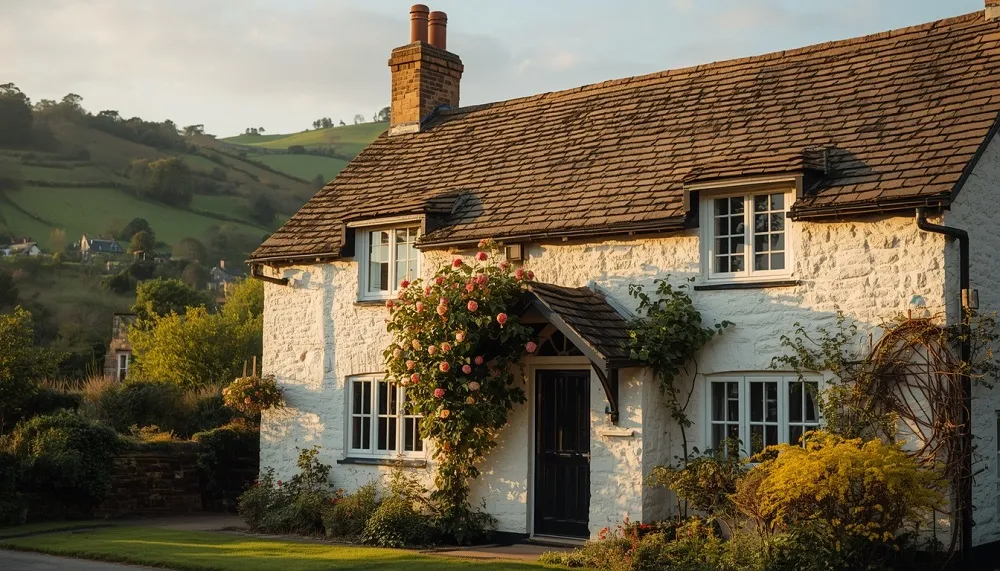
Coastal vs Mountain Bases: The Real Trade-Off
The coastal versus mountain choice is not just about scenery. It changes the rhythm of the week. A coastal base in Pembrokeshire gives you variety without driving: a beach morning, a coast path afternoon, a harbour evening, all from the same cottage. A mountain base in Eryri gives you depth: bigger walks, wilder weather, and days that are planned around one fell or one valley. A hills base in Bannau Brycheiniog sits between the two: varied walks, market towns and waterfalls, with less driving than Eryri and less crowding than a Pembrokeshire resort in peak season.
Weather changes the trade-off too. Coastal cottages get sea breezes, changeable beach weather and the chance of a perfect beach day that no mountain walk can match. Mountain cottages get cooler temperatures, more rain and mist, and the chance of a clear summit day that no beach can match. Hills cottages get a middle course, with open ridges that can still be windy and exposed, and wooded waterfall valleys that stay sheltered. For a first Welsh break, the safest weather bet is a base with indoor options nearby: a town with cafes, a market, a museum or a castle, so a wet day is still a good day.
Crowds also differ. Pembrokeshire resorts, especially Tenby, are busiest in school holidays, and the most popular beaches fill up. Eryri honeypots, such as Llanberis and the Yr Wyddfa paths, are busiest on summer weekends, while quieter valleys stay calm even in peak season. Bannau Brycheiniog is generally quieter than both, except for Pen y Fan and the waterfall walks on fine weekends. If you travel in school holidays, book early everywhere, choose a cottage with parking, and plan popular walks for early mornings. If you travel outside school holidays, all three regions open up, and a quieter base becomes a real option.
Best Bases by Break Type
For a first Welsh cottage holiday, Brecon or Tenby are the safest picks. Brecon gives you a market town, a canal, easy hills and waterfalls, and a manageable drive. Tenby gives you beaches, a harbour, a railway station and a resort that is easy to enjoy without a car. Both let you learn how a Welsh cottage break works before you try a wilder valley or a remote coast path section.
For serious walkers, Betws-y-Coed or Llanberis in Eryri are the strongest bases, with mountain paths, forest trails and lake walks close by. For coast path walkers, St Davids or Solva in Pembrokeshire put you on the trail from the door, and the path sections around them are among the best in the region. For waterfall walkers, a base near Pontneddfechan or Brecon in Bannau Brycheiniog gives you the falls, the hills and a town to return to.
For families, Tenby and the Pembrokeshire south coast offer beaches, a harbour, attractions and a wide choice of family cottages, while Brecon and the Beacons offer gentler walks, a canal and open hills that suit younger legs. Eryri suits families with older children who are ready for mountain paths, and Betws-y-Coed works well as a family base because it has shops, cafes, forest walks and a railway station in one small town. In every region, check the cottage for a garden, a bath, a washing machine and room for everyone to eat together, since those practical details matter more on a family week than a view.
For couples, a quiet village cottage works in all three regions, but the flavour differs. In Eryri, a slate village cottage with a log burner and a view suits a walking couple. In Pembrokeshire, a harbour cottage in Solva or a sea-view cottage near St Davids suits a coastal couple. In Bannau Brycheiniog, a stone cottage near Hay-on-Wye or Crickhowell, with a garden and dark skies, suits a slow couple break. If a hot tub and a log burner are part of the plan, read our guide to romantic cottage breaks for two with a hot tub and log burner and check the hot tub rules, heating costs and privacy of the garden before you book, since a hot tub in a shared courtyard is a different stay from a private one.
For a short break of two to four nights, Bannau Brycheiniog is the easiest region to reach and enjoy in a short window, and Tenby is the easiest Pembrokeshire base for a short coastal break. Eryri rewards a full week more than a short break, because the driving and the mountain days take time. Our when to book guide covers minimum stays and midweek value in more detail, and the same rules apply in Wales: check the minimum stay, the arrival day and the changeover day before you fall in love with a cottage.
The Car Question, Answered by Region
Do you need a car for a Welsh cottage holiday? In Pembrokeshire, you can manage without one in Tenby, which has a railway station and buses, and with care in St Davids, which has bus links. Elsewhere on the coast, a car helps a lot, because beaches, path sections and villages are spread out and bus services are thinner. In Bannau Brycheiniog, you can manage without a car in Brecon or Abergavenny, both of which have bus and rail links, but a car opens up the waterfall country and the quieter valleys. In Eryri, you can manage without a car in Betws-y-Coed or Blaenau Ffestiniog, on rail and bus routes, but a car gives you far more freedom for mountain days.
The honest rule is this: without a car, stay in a town or a village on a bus or rail route, and choose walks and beaches you can reach from that base. With a car, you can choose a quieter cottage, but you must check parking at the cottage, parking at the walks you plan, and the width and steepness of the access road. A rural cottage up a single-track lane, with no dedicated parking, can be a wonderful stay for a confident driver and a stressful stay for anyone else. Ask the owner or agency directly: where exactly do we park, is it included in the price, and how far is it from the door with luggage?
Driving in Wales also needs a note on language and signage. Place names appear in Welsh and English, and in Eryri the Welsh names Eryri and Yr Wyddfa are now used in preference to Snowdonia and Snowdon on official signage. Sat nav and maps usually recognise both, but it helps to note the Welsh spelling of your village when you book, since a small spelling difference can send you to the wrong valley. Keep a paper map or an offline map for valleys where signal is patchy, and allow extra time for narrow roads and farm traffic.
Dog and Family Fit: Which Region Suits Your Party?
All three regions are dog-friendly in the broad sense, but the details differ. Eryri offers mountain and forest walks where dogs can run, provided they are under control around livestock, which is a real and year-round rule on Welsh farmland. Pembrokeshire offers beach walks, but seasonal dog restrictions apply on some beaches, so check the beach rules for your exact dates rather than assuming a beach is dog-friendly all year. Bannau Brycheiniog offers open hills and wooded valleys where dogs can walk well, with the same livestock rule applying on farmland and open moor.
For cottage choice, the dog test is the same in every region: is the garden enclosed, and is it enclosed securely enough for your dog? A garden described as enclosed can still have gaps, low walls or shared access, so ask for specifics, including fence height and whether the garden is private to the cottage. Also confirm the dog fee, how many dogs are allowed, whether dogs can be left alone in the cottage, and whether dogs are allowed on furniture or upstairs. Our dog-friendly cottage checklist covers these questions in full, and it is worth working through before you book a Welsh cottage with a dog, since a good region cannot fix a garden that does not suit your dog.
For families, the fit is about safe space and easy days. Pembrokeshire wins on beaches and harbour days, with shallow water, beach cafes and a wide choice of family cottages. Bannau Brycheiniog wins on gentle walks and open space, with canal paths, waterfall walks and market towns that are easy with a pushchair on the flatter routes, though not on steep gorge paths. Eryri wins on adventure for older children, with mountain railways, slate mines, forest trails and lake activities, but it needs more planning for younger children, including shorter walks, a cottage with a bath and a garden, and a wet-day plan. In every region, check the stairs for toddlers, the garden for safety, and the distance to the nearest shop for a self-catering week with children.
What a Welsh Cottage Should Include
Self-catering in Wales has its own checklist, and it is worth running through before you book. Heating is first, especially in Eryri and in exposed cottages in the Beacons, because a cottage that is cold in the evening is a poor stay even in summer. Ask whether heating is included, whether a log burner is supplied with logs, and whether there is a drying area for wet walking gear. Linen and towels are normally included, but not always, so confirm it rather than assuming it, and ask about a welcome pack, a travel cot, a high chair and a dog fee in the same message.
Kitchen equipment matters more on a Welsh walking or beach week than on a city break, because you will cook properly most evenings. Check that the kitchen has a full cooker, enough pans and crockery for your party, and a washing machine, since walking clothes and beach towels need washing during the week. Also check the practical details that listings sometimes gloss over: mobile signal and Wi-Fi strength, especially in valleys; the steepness of stairs for older guests; whether the cottage is up a track that needs a confident driver; and the arrival and departure times, which are often stricter in small cottages with a single changeover cleaner.
For a cottage with a hot tub, check whether the tub is private to the cottage or shared, whether it is heated all year, what the cleaning and heating costs are, and whether children are allowed in it. Our guide to cottages with a hot tub explains how to check a feature like a hot tub properly, rather than booking on the photo alone. The same principle applies to a log burner, an enclosed garden and a sea view: ask for the detail behind the photo, and get the answer in writing before you pay a deposit.
When to Go and What It Costs
Wales is a year-round cottage destination, but the experience changes sharply by season. Summer and school holidays bring the warmest weather, the fullest beach and attraction timetables, and the busiest towns and honeypot walks. Spring and autumn bring quieter paths, lower prices and beautiful light, with a higher chance of rain, especially in the mountains. Winter brings short days, quiet villages, log-burner evenings and dark skies, but some attractions and boat services run reduced timetables, and mountain paths need proper winter care.
For a first Welsh visit, late spring or early autumn is often the best balance: good daylight, quieter roads, a wider choice of cottages and a better chance of a beach day than in deep winter. If you can only travel in school holidays, book early, choose a town base with parking, and plan popular walks and beaches for early mornings. If you want the lowest prices and the quietest villages, a midweek stay outside school holidays is usually the best value, but check what is open before you book, since small village cafes and attractions may close in winter.
Prices are indicative only and vary by cottage size, location, season and features, so always verify the total price with the provider before booking, including cleaning fees, pet fees, linen charges and any heating supplement. Our UK cottage holiday cost guide explains how prices vary by region, size and season in more detail. As a rule, sea-view cottages in Pembrokeshire and honeypot village cottages in Eryri cost more than inland or quiet-valley cottages, larger cottages and hot tub cottages cost more than small ones, and peak weeks book first, especially for coastal cottages in Pembrokeshire, where the best properties can book many months ahead for July and August.
How to Choose Your Welsh Region in Five Steps
Step one: pick your trip type. Mountain walking points to Eryri. Beach and coast path days point to Pembrokeshire. Gentler hills, waterfalls and dark skies point to Bannau Brycheiniog. Step two: decide on a car. Without one, stay in a town on a bus or rail route, such as Tenby, Brecon, Betws-y-Coed or Abergavenny. With one, the whole region opens up, but check parking at the cottage and at the walks you plan.
Step three: shortlist cottages in one base, not three regions. Comparing cottages across the whole of Wales makes every choice harder. Pick your region, pick your base, then compare cottages inside it on size, bathrooms, parking, heating, garden and total price. Step four: verify the small print, including dog fees, linen, heating, cancellation terms and the arrival and departure times. Step five: book the cottage, then plan walks, beaches and waterfall days around it, rather than the other way round.
If you are torn between two regions, the tie-breaker is simple: choose the one with the better base for your party on a wet day. A region you enjoy in rain, with a town, a market, a castle or a good pub to fall back on, will give you a better week than a region you only enjoy in sunshine. You can visit the other region for a day trip, and you will know within a day whether it should be your base next time. For comparison, our guides to other regions use the same base-first method: the Lake District first-timer guide compares lakeside and fell bases, and our Cotswold villages guide compares village and market town bases. The method is the same everywhere: choose the base for your trip type, then choose the cottage inside it.
Frequently Asked Questions
Which Welsh region is best for a first cottage holiday?
For most first-timers, Bannau Brycheiniog, around Brecon, or Pembrokeshire, around Tenby, are the safest choices. Brecon gives you a market town, easy hills and waterfalls, while Tenby gives you beaches, a harbour and a railway station. Eryri is superb, but it rewards a little more planning, especially for mountain days and driving.
Is Snowdonia now called Eryri?
Yes, in official use. The National Park Authority now uses Eryri for the park and Yr Wyddfa for its highest peak, in preference to Snowdonia and Snowdon. Both names are still widely understood, and maps and sat nav usually recognise both, but it helps to note the Welsh spelling of your village when you book.
Which region is best for a dog-friendly cottage holiday in Wales?
All three regions suit dogs, but the test is the cottage, not the region. Confirm the garden is securely enclosed, check the dog fee and the rules on leaving dogs alone, and check beach restrictions for your exact dates in Pembrokeshire. Keep dogs under control around livestock everywhere in Wales, especially on farmland and open moor.
Do I need a car for a cottage holiday in Wales?
Not necessarily, if you choose the right base. Tenby, Brecon, Abergavenny and Betws-y-Coed all have bus or rail links and walks, beaches or hills nearby. A car gives you much more freedom, especially for quiet valleys, waterfall country and coast path sections, but check parking at the cottage before you book.
Which Welsh region is best for families?
Pembrokeshire is the easiest family region, with beaches, harbours and a wide choice of family cottages. Bannau Brycheiniog suits families who want gentler walks and market towns, while Eryri suits families with older children who are ready for mountain paths and lake activities. In every region, check the garden, the stairs and the distance to the nearest shop.
When is the best time for a Welsh cottage holiday?
Late spring and early autumn often give the best balance of daylight, quieter roads and cottage choice. Summer is the busiest and most expensive time, especially in Pembrokeshire resorts and Eryri honeypots. Winter suits quiet breaks, log-burner evenings and dark skies in Bannau Brycheiniog, but check opening times and mountain conditions before you book.
Whichever region you choose, the rule is the same: pick the base first, check parking, heating, the garden and the total price, and then choose the cottage that fits your party. Wales rewards that approach, because the difference between a mountain base, a coastal base and a hills base is the difference between three different holidays, and getting that first choice right is what makes the rest of the week easy.

