New Year Cottage Holidays in the UK: How to Book a Festive New Year Break
A New Year cottage break is the quiet answer to a noisy night. Instead of a crowded bar or a hotel ballroom, you get a cottage of your own, a fire in the evening, and midnight marked in your own way. It is also a break with its own rules: the dates fall awkwardly across the week, most cottages ask for three or four nights, and the best ones are booked months ahead. This guide explains how it works, so you can book the right dates and the right cottage.
If you are new to self-catering, start with our self-catering accommodation guide, and if you are planning the whole festive season, read our guide to Christmas cottage holidays as well. Treat every price here as indicative, and verify it with the provider before you book.
When Does a New Year Cottage Break Actually Run?
New Year’s Eve is Thursday 31 December 2026, and New Year’s Day is Friday 1 January 2027, a bank holiday across the whole of the UK. That matters, because to be in the cottage at midnight your break has to start on or before Thursday 31 December. A standard Friday to Monday weekend starts on New Year’s Day itself, which is a day too late.
Scotland gets a longer run. In Scotland 2 January is a bank holiday too, and because it falls on a Saturday in 2027, the holiday moves to Monday 4 January. That gives Scotland a four-day weekend over New Year. In England and Wales, Friday 1 January is the only bank holiday, so the break is a three-day weekend unless you take extra days off.
Most New Year breaks are built around the days after Christmas. A three-night stay from Monday 28 December to Thursday 31 December is the cheapest way in, but you check out on the morning of New Year’s Eve, so it does not cover midnight. A four-night stay from Monday 28 December to Friday 1 January is the sweet spot: quiet days after Christmas, midnight in the cottage, and a slow start on New Year’s Day. A seven-night stay to Monday 4 January covers the whole festive week.
How Far Ahead Should You Book for New Year?
New Year is one of the two busiest weeks of the cottage year, and the cottages with a hot tub, a log burner, or room for a large family go first. Lodges with hot tubs are often booked by the autumn, because there are only so many self-catering places with a private hot tub, and narrowing that to the dates covering 31 December leaves very little to choose from. If you want a particular cottage for New Year, book it in the summer or early autumn.
That does not mean a late booking is impossible. Smaller cottages, glamping sites, and owners who run their own listings sometimes offer short stays arriving on 30 or 31 December. A late search is worth trying, but expect a narrower choice and a higher price. See our guide to when to book a UK cottage holiday for lead times and the cheapest months to travel.
What a New Year Cottage Needs to Have
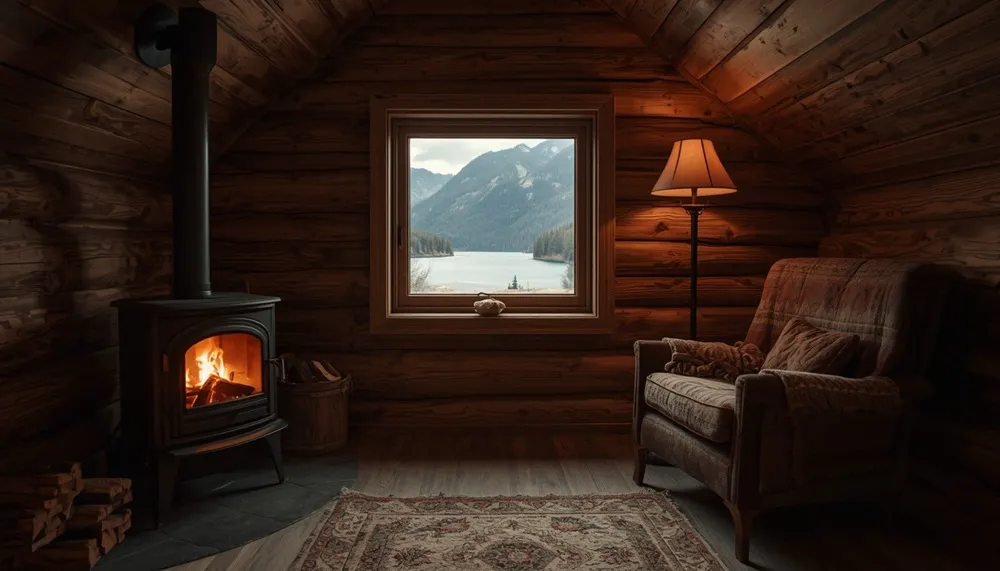
Heating is the first thing to check, and it is not a small detail at the end of December. Ask whether the cottage has central heating, whether it is included in the price or charged extra, and whether you can control it yourself. Some cottages charge for heating by the meter or add a fuel surcharge in winter, so ask before you book. A log burner is a bonus, but only if the cottage provides logs or tells you where to buy them.
Space is the second thing to check. A New Year break is spent mostly indoors, so the living room has to fit everyone at once, with enough chairs for the whole party and a dining table big enough for a proper New Year’s Eve supper. Check the number of bathrooms too: one bathroom for eight people is a slow start to New Year’s Day. Then look at the kitchen: the oven, the hobs, and whether there is a dishwasher. If the cottage has a hot tub, ask whether it is open in winter and whether there is a charge.
Best Regions for a New Year Cottage Break
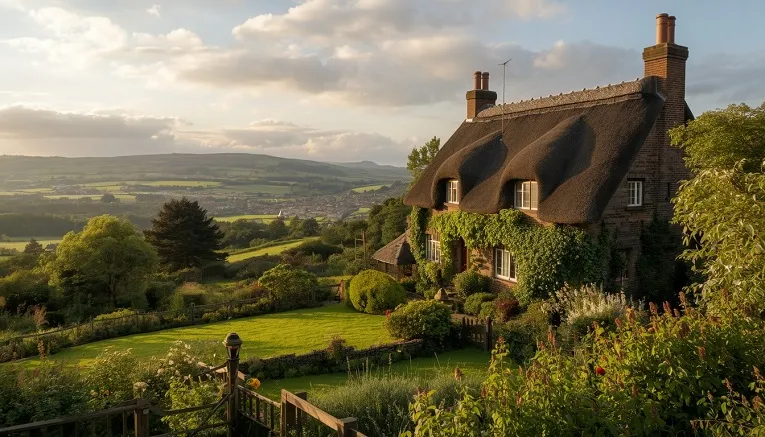
Scotland is the natural first choice for New Year, because Hogmanay is Scotland’s own celebration and it runs for several days. Edinburgh hosts one of the largest New Year street parties in the world, and the extra bank holiday on Monday 4 January makes a four-night break easy to arrange. A cottage in the Highlands or the Borders gives you dark skies, quiet walks, and a proper winter.
The Lake District and the Peak District suit a New Year break built around walking and firesides, with villages and pubs that stay open over the festive season. The Cotswolds suits a quieter break, with stone villages, country pubs, and short walks between them. Cornwall and Devon are quieter in winter than in summer, which some readers prefer, but check the weather and the roads, because a coastal cottage in a storm is a different experience from one in July.
Wherever you choose, pick a base with a walkable village, a pub, and a shop. Many village shops keep short hours over New Year, and some close on New Year’s Day. A cottage near a market town gives you a fallback, and a pub in walking distance means nobody drives on New Year’s Eve.
New Year With Family, With Friends, or Just the Two of You
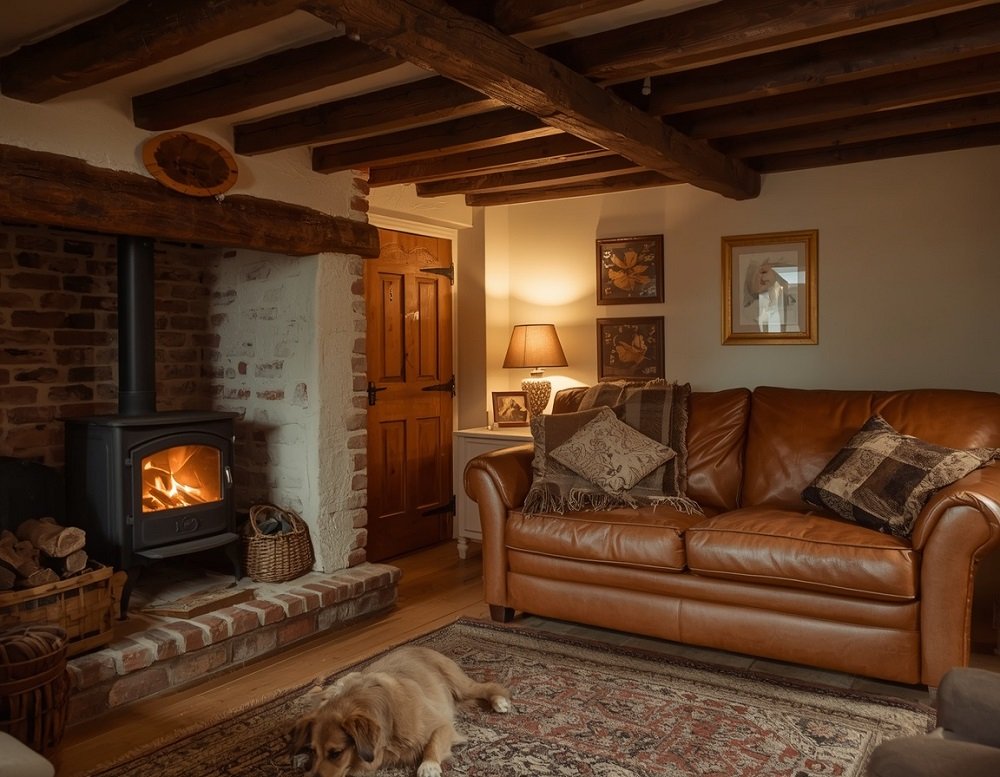
A family New Year break needs space, bedrooms, and a plan for the children. A large cottage with a games room and a living room big enough for everyone suits a family gathering, and a hot tub gives the teenagers something to do while the adults cook. Check the sleeping arrangements carefully: a cottage that sleeps ten across five bedrooms works for a family, while one that sleeps ten across three bedrooms and two sofa beds does not.
A break with friends is a different shape. The cottage needs enough bedrooms for everyone to have their own bed, and a dining table that fits the whole group. A games room, a large kitchen, and a log burner matter more than a sea view at this time of year. Agree on the money before you book, because the person who books it should not be chasing the others for their share in December.
A New Year break for two is the simplest version, and often the loveliest. A one-bedroom cottage with a log burner, a bath, and a view of the hills is all you need, and a midweek arrival on 30 or 31 December can be good value. If you want a hot tub, book early, because the small cottages with a private hot tub are the first to go.
New Year Cottage Breaks With a Dog
A dog makes a New Year cottage break better, and the checks are the same ones that matter on any dog-friendly stay, only more urgent at midnight. Ask how many dogs are allowed, what the fee is, and whether the garden is enclosed, because an enclosed garden matters most in winter, when it is dark by four in the afternoon. Ask whether the dog can be left alone in the cottage.
Fireworks are the real issue for a dog at New Year. By law, fireworks must not be set off between 11pm and 7am, except on New Year’s Eve, when the cut-off is 1am. That means your dog will hear fireworks at midnight, and possibly for an hour afterwards. If your dog is nervous around fireworks, choose a rural cottage away from houses and gardens, keep the dog inside with the curtains drawn and the television on, and take it out for a long walk in the afternoon so it is tired by midnight.
What a New Year Cottage Break Costs
A New Year cottage break is one of the dearest weeks of the year. New Year is a peak week, so the price per night is higher than a January week in the same cottage, and a four-night break can cost close to a full week in the low season. The shorter the stay, the closer the price gets to the weekly rental, because the owner still pays for a full clean and changeover.
As a guide to the shape of the pricing, one Yorkshire operator lists short breaks over 11 December to 4 January at 425 pounds for a cottage sleeping two and 895 pounds for a cottage sleeping eight. That is one operator in one region, not a national average. Work out the cost per person per night before you compare cottages, and always check what is included: linen, heating, a pet fee, and a deposit all change the real total.
Minimum Stays, Arrival Days and Check-In Times
Most cottages set a minimum stay over New Year, usually three or four nights, or a full week. English Heritage, for example, offers its festive cottages for four to seven nights between Monday 21 December 2026 and Monday 4 January 2027, with arrivals on Mondays, Tuesdays, and Wednesdays. Smaller operators and private owners are more flexible, and some allow a three-night stay or a midweek arrival on 30 or 31 December, but that flexibility is more common close to the date.
Arrival days matter as much as the minimum stay. Many cottages change over on a Monday or a Friday, so a Monday 28 December arrival is the standard pattern for New Year, and a Friday 1 January arrival misses midnight altogether. Check the changeover day on the listing before you plan around a particular date, and ask the owner if you need a different day.
Check-in is usually from about 3pm or 4pm, and checkout by about 10am, so a four-night break really gives you Monday afternoon, three full days, and Friday morning. Plan the journey around that, and allow extra time for winter roads. If the cottage is at the end of a single-track lane, ask about parking before you book.
Food, Drink and Midnight: Eating Out and Celebrating at the Cottage
Most New Year cottage breaks are self-catered, which means the food is your job, and a little planning makes it easy. Bring the first night’s food with you: bread, milk, butter, eggs, and something simple for supper, plus tea, coffee, and breakfast for the first morning. Village shops keep short hours over New Year, and many close on New Year’s Day, so do not plan to shop on arrival. A supermarket delivery to the cottage is worth arranging if the cottage allows it.
Eating out over New Year needs booking, because the village pub and the local restaurant will both be full on New Year’s Eve. Book a table in advance, and check the opening hours. If you plan to celebrate at the cottage, check the rules on fireworks and candles. Fireworks are only for sale from 26 to 31 December, and you must be 18 to buy them. London’s New Year’s Eve fireworks on the Thames are ticketed, so buy the ticket before you book the cottage.
Getting there and back is part of the plan too. No trains run on Christmas Day, and over New Year the trains run a reduced service: services end earlier on New Year’s Eve, and on New Year’s Day they start later and are amended, with no LNER services north of Edinburgh. If you are travelling by train, check your journey on National Rail before you travel. If you are driving, keep a torch, a blanket, and a phone charger in the car.
How to Choose and Book: A Quick Checklist
Start with the dates. Check that the break starts on or before Thursday 31 December 2026, and that the minimum stay covers midnight. Then check the heating, the log burner, and whether logs and fuel are included. Then check the space: enough chairs, a table big enough for the party, and enough bathrooms. Then check the kitchen and the dishwasher, and the dog rules and the garden if you are bringing a dog.
Then check the practical details that catch people out: the changeover day, the check-in time, the parking, the Wi-Fi, and the cancellation terms. Ask what happens if you have to cancel, and whether the deposit is refundable. Read the listing properly, and ask the owner any question it does not answer. Book early and pay the deposit promptly, because the best cottages for New Year are booked months ahead.
Frequently Asked Questions
Can you book a cottage for just New Year’s Eve night?
Rarely. Most cottages set a minimum stay of three or four nights over New Year, and a single night is almost never offered. A small cottage or a glamping site may allow a short stay arriving on 30 or 31 December, but plan for at least three nights.
Are fireworks allowed at a holiday cottage?
It depends on the cottage and its rules. By law, fireworks must not be set off between 11pm and 7am, except on New Year’s Eve, when the cut-off is 1am, and you must be 18 to buy them. Many cottages ban fireworks in their own grounds. Always ask the owner first.
Is a New Year cottage break cheaper than Christmas?
Not usually. New Year is a peak week, like Christmas, and the price per night is similar. A four-night New Year break can cost close to a full low-season week in the same cottage, because the owner still pays for a full clean and changeover.
Do cottages provide logs or coal for the fire?
Sometimes, but not always. Some cottages include a starter pack of logs, some charge extra, and some expect you to buy your own. Ask before you book, and check where the nearest supplier is.
What happens if it snows while you are there?
A cottage in the hills can be cut off by snow, so check the forecast before you travel and keep the car fuelled. Ask the owner about the road to the cottage and whether it is gritted. If the weather turns bad, stay put and keep warm, because a winter cottage with a fire and a full cupboard is a good place to be snowed in.
A New Year cottage break works when the pieces fit: a break that starts on or before 31 December, a cottage with proper heating and enough space for the party, a village with a pub and a shop nearby, and a booking made early enough to get the cottage you want. Get those right, and the turn of the year will feel like a proper holiday.