
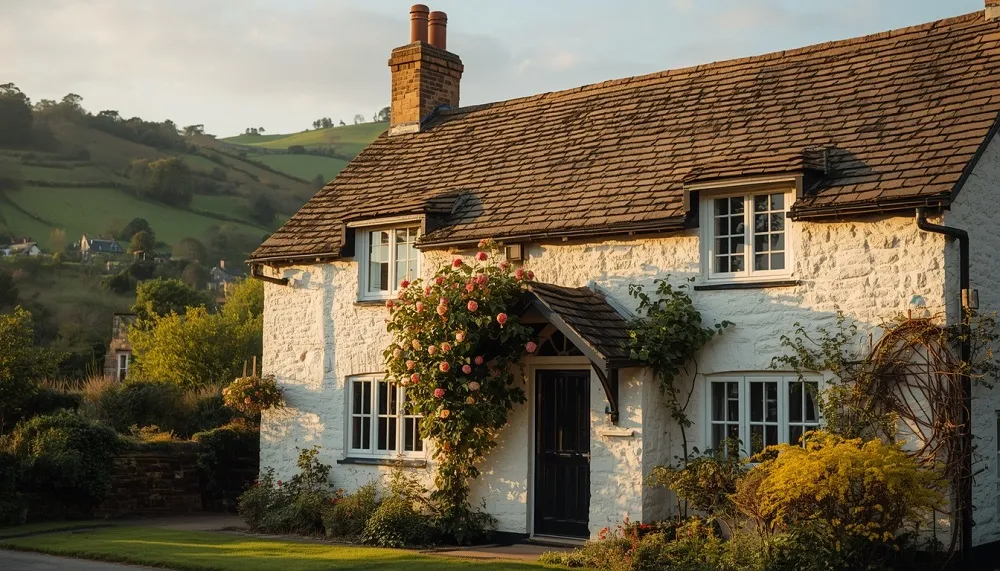
Workation Cottage Holidays in the UK: How to Choose a Cottage With Fast Wi-Fi and a Proper Workspace
A workation is a working holiday: you take your laptop to a cottage, work your normal hours, and spend your mornings, lunch breaks and evenings somewhere you actually want to be. It is not a holiday with a bit of email on the side, and it is not an office with a view. The cottage has to do two jobs at once, and most of the cottages that fail at the first job look perfect in the photos.
The Office for National Statistics found that 28 percent of working adults in Great Britain hybrid worked between January and March 2025, so plenty of people now have the freedom to work from anywhere with a decent connection. A cottage is a natural choice for that freedom: a whole house, a kitchen of your own, and a walk from the door when the working day ends. This guide explains how to pick one that really works for a working week, from the Wi-Fi speed you need to the desk, the mobile signal, and the questions worth asking before you pay.
What a Workation Cottage Actually Is
A workation cottage is a self-catering cottage chosen for work as well as rest. The difference from an ordinary cottage break is the list of things that matter. On a normal holiday, a slow connection is a small annoyance. On a workation, it is the difference between a normal working day and a day spent apologising on video calls. The same goes for the workspace. A dining table works for a weekend of light email, but it is a poor desk for a full week of eight-hour days.
Some cottages now advertise themselves as work-ready, with a desk, fast Wi-Fi and a quiet room. Others simply list Wi-Fi among the amenities, which tells you almost nothing. A cottage can have Wi-Fi and still be a bad place to work, if the router is at one end of a thick-walled stone house and the only table is in a draughty kitchen. Treat a vague mention of Wi-Fi as a question to ask, not an answer.
How Much Wi-Fi Speed Do You Really Need?
Speed is measured in Mbps, and the number that matters for work is not only the download speed. Upload speed matters just as much, because video calls send as well as receive. A video call needs only around 2 to 4 Mbps each way, but it needs them steadily, with no dropouts. A connection that averages 30 Mbps and keeps dipping to 2 Mbps will give you worse calls than a steady 15 Mbps line.
As a rough guide, one person doing email and browsing can manage on 10 Mbps or more. One home worker who also streams in the evening will be comfortable on 30 to 50 Mbps down and 10 Mbps up. Two home workers on video calls, with cloud storage syncing and children streaming, need 100 Mbps down and 20 Mbps up or more. These are practical figures from broadband guides that test real connections.
The headline speed on a listing is rarely the speed you get. A cottage advertised as having superfast broadband may have fibre to the cabinet and old copper wire for the last stretch to the house, which is what FTTC means. Full fibre, or FTTP, runs fibre all the way to the property. Ask which type the cottage has, and ask for a recent speed test result if the owner has one.
How to Check the Wi-Fi Before You Book
The best check costs nothing and takes a minute. Ofcom runs a free broadband and mobile checker that reports what is available at an exact address, with predicted speed ranges. Search the full address, not just the postcode, because two houses on the same street can have very different connections. One side of a road can have full fibre while the other is still waiting.
Ask the owner or the agency directly. Good questions are simple ones: what speed do guests usually get, is the connection full fibre or fibre to the cabinet, and does the Wi-Fi reach the room you plan to work in? An owner who knows the answers is a good sign. Reviews help too: a review that says the Wi-Fi was fine for a video call is worth more than a listing that says superfast.
The Workspace: Desk, Chair, Light and Quiet

A proper workspace needs four things: a desk or table at the right height, a chair you can sit in for hours, daylight, and quiet. The dining table fails on at least two of these in most cottages. It is often the wrong height for a laptop, the chairs are built for meals rather than work, and it sits in the middle of the house where everyone passes through. If the cottage has a separate room with a desk, that is worth more than a slightly bigger living room.
A desk facing a window gives you daylight and a view, which makes a long working day far easier. Quiet is the hardest thing to judge from a listing. A cottage on a main road, next to a farm, or above a pub will not give you the silence a video call needs, so ask about road noise and whether the cottage shares walls with another property. If two people need to work at once, look for a cottage with two rooms that can each hold a desk, because two calls in one room do not work.
Mobile Signal and a Backup Plan
Mobile signal is the backup when the Wi-Fi drops, and in a cottage it is often weaker than you expect. Thick stone walls, foil-backed insulation and low-emissivity glazing all weaken a signal that is strong at the garden gate. Coverage maps show outdoor predictions, so they tell you little about the signal at the desk. Ask the owner which network works best in the cottage before you book.
A 4G or 5G home broadband router is a useful backup for a longer stay, and some cottages already have one. If your own phone plan includes tethering, test it on the first morning and keep it as a fallback for important calls. In a valley or a remote spot, the mobile signal may be no better than the broadband, so run the Ofcom mobile checker alongside the broadband check.
Power, Plugs and the Practical Kit List
Old cottages were not built for laptops, monitors and chargers. Check that the room you plan to work in has enough plug sockets, and that they are near the desk rather than behind a heavy bookcase. A cottage with two sockets in the whole living room will have you running extension leads across the floor by day two. Ask the owner how many sockets are near the desk, and whether there is a spare one for a monitor or a second charger.
Pack for the work, not just the holiday. Bring your laptop charger and a spare if you have one, a phone charger, and an extension lead. A laptop stand and a separate keyboard and mouse will save your neck and wrists over a full week, and they pack flat. Headphones with a microphone are the single most useful item for a workation, because they fix bad room acoustics and let you take a call from the garden. Ask about the heating too: a stone cottage takes time to warm up.
How Long to Stay, and What It Costs

A workation works best as a stay of a week or more. Two or three nights is barely enough to settle in, set up the desk, and learn the quirks of the Wi-Fi, and the changeover costs mean short stays cost more per night than a full week. A week gives you working days and a proper weekend in the same place, which is the whole point. Some owners offer a discount for a longer stay, especially outside school holidays.
Cost follows the same pattern as any cottage stay, and our guide to how much a UK cottage holiday costs sets out the ranges by region, size and season. A workation is usually cheaper per night than a holiday in the same cottage, because you are travelling outside the peak weeks and staying longer. Check the extras: cleaning fees, linen charges, heating or log costs, a pet fee if you bring a dog, and a deposit. Treat every price as indicative and verify it with the provider before you book. The cheapest months are usually January, February and November, when cottages sit empty midweek and owners welcome a longer booking.
Best Regions for a UK Workation

The best region for a workation is one with reliable broadband, a village with shops and a pub, and walks from the door for the end of the working day. The Cotswolds suits a first workation well, because the villages are close together, the pubs and shops are walkable, and many cottages there have been updated with full fibre. Dartmoor and Devon suit walkers, but rural broadband varies from village to village, so check the connection carefully.
The Lake District and the Yorkshire Dales are beautiful places to work, and both have villages with good connections, but the valleys can be patchy for mobile signal, and a cottage at the end of a single-track lane may have slower broadband than one in the village. Cornwall works well outside the summer, when the roads are quiet and the coast is empty. Wales has the same pattern: the towns and larger villages usually have solid broadband, while the remote cottages are the ones to check twice. If you need a guaranteed connection, a market town base beats a remote cottage, because towns have more choice of broadband.
Workation With a Dog, a Partner or Family
A dog makes a workation better, as long as the cottage suits a dog that will be alone for part of the day. Check the garden is enclosed, ask whether the dog can be left alone in the cottage while you work in another room, and choose a base with walks from the door so the lunch break is a real break. Our guide to dog-friendly cottage holidays sets out the checks that matter, from pet fees to enclosed gardens, and they all apply twice on a working stay.
A partner who is not working changes the shape of the week. They will want things to do while you work, which means a village with a pub, a shop and a walk, rather than a remote cottage with nothing in reach. Agree the working hours before you go, and agree when the working day ends, because a workation fails when work leaks into every evening. A family workation needs the most space of all, so treat the 100 Mbps guide as a minimum, and give each worker a room with a door that closes.
A Short Checklist Before You Book
Run through this list before you pay, and you will avoid most of the problems that spoil a workation. First, the connection: run the Ofcom checker on the exact address, ask the owner for a recent speed test, and confirm whether the connection is full fibre. Second, the workspace: is there a desk, a proper chair, daylight, and a quiet room? Third, the signal: which mobile network works best inside the cottage, and do you have a tethering backup?
Fourth, the practical details: enough plug sockets near the desk, heating you can control, and a washing machine if you are staying a week or more. Fifth, the stay itself: minimum stay, changeover day, cleaning and linen charges, pet fees, deposit, and cancellation terms. A full guide to self-catering accommodation explains what is usually included in a cottage stay, and our guide to when to book a UK cottage holiday will help you pick the cheapest weeks for a working stay.
Frequently Asked Questions
What is a workation?
A workation is a trip that combines remote work with a change of scenery. You work your normal hours from a cottage instead of from home, and use your free time to enjoy the place you are staying in. It is different from a holiday, because work is part of the plan, and different from working from home, because the setting is new.
How fast does the Wi-Fi need to be for a workation?
One person working alone will be comfortable on 30 to 50 Mbps down and 10 Mbps up. Two people on video calls need 100 Mbps down and 20 Mbps up or more. A video call needs only 2 to 4 Mbps each way, but it needs them steadily, so a stable connection matters more than a high headline speed.
Can I work from any cottage with Wi-Fi?
Not really. A cottage can list Wi-Fi and still be a poor place to work, if the signal does not reach the room you work in, if there is no desk or proper chair, or if the mobile signal is too weak for a backup. Check the speed, the workspace and the signal before you book.
Do I need to tell the owner I will be working from the cottage?
Yes, and it helps both sides. The owner can tell you honestly whether the Wi-Fi copes with video calls, whether the desk gets daylight, and whether the cottage is quiet during the day. Some owners welcome working guests, especially outside the peak season, and may offer a longer-stay price if you ask.
Is a workation cheaper than a normal cottage holiday?
Often, yes, per night. Workations usually happen outside school holidays and run for a week or more, which is when cottages are cheapest. Compare the full cost, including cleaning, linen, heating and any pet fee, and verify every price with the provider before you book.
A workation cottage lets you do a proper day of work and then step outside into somewhere worth being. Get the connection, the desk and the quiet right, and the rest takes care of itself. Choose the cottage for the working week first and the holiday second.

