
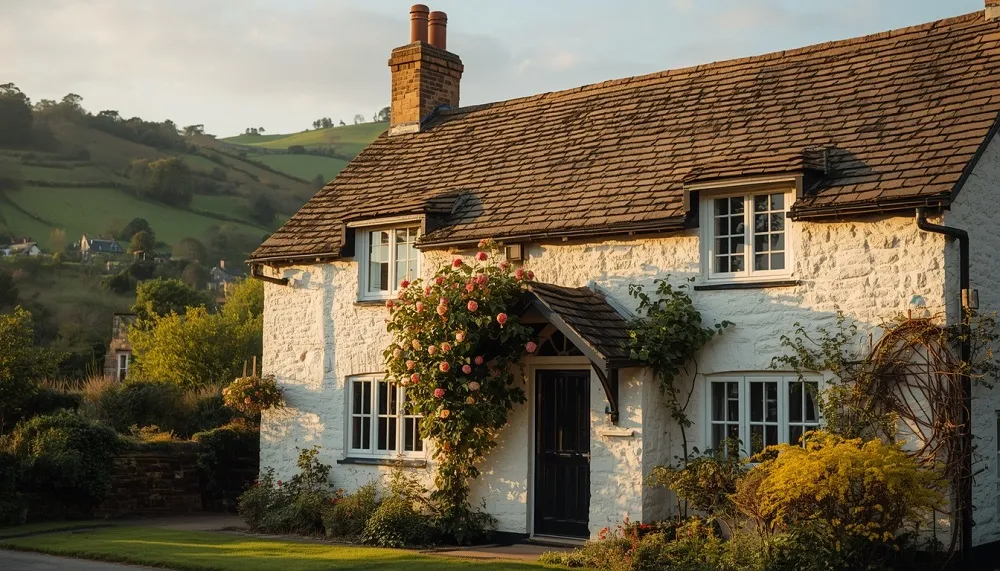
Large & Family Cottage Holidays in the UK: Cottages That Sleep Everyone Together
A cottage holiday works best when everyone is under one roof, and that is exactly where large cottage holidays go wrong most often. The listing says it sleeps ten, the photographs show a handsome farmhouse, and the price looks fair, yet by the second evening one couple is sleeping on a sofa bed in the living room, the teenagers are queuing for a single bathroom, and the grandparents have taken the only quiet bedroom at the top of a steep staircase. The cottage did sleep ten, in the strict sense of the word, but it did not sleep ten comfortably, and comfort is the whole point of booking a big cottage in the first place.
This guide explains how to choose a large or family cottage that genuinely sleeps everyone together, from what the sleeps number really means to the bedroom, bathroom and living space ratios that decide whether a week feels spacious or crowded. It covers multi-generational stays, enclosed gardens and child safety, games rooms and rainy-day space, the regions that suit big groups best, how far ahead to book, and the per-person maths that shows when a large cottage is actually good value. If you are new to self-catering, start with our self-catering accommodation guide, which explains what is normally included in a cottage stay and what to bring, and read our guide to how much a UK cottage holiday costs before you compare prices, since the figures below are indicative and every price should be verified with the provider.
What “Sleeps 10” Really Means (and What It Does Not)
The sleeps number on a cottage listing is a maximum occupancy figure, not a comfort rating. It states the largest number of people the property is licensed and insured to hold, and that limit is set by fire safety rules and the property’s insurance, so it cannot be exceeded even by one extra guest. What the number does not tell you is how those people sleep, and that is where the trouble starts. A cottage that sleeps ten might have five proper bedrooms with real beds, or it might have three bedrooms plus a sofa bed in the living room and a pull-out bed in a study, and both versions carry the same headline number.
The first question to ask any owner or agency is for the sleeping arrangement room by room, with bed sizes. A king bed and two doubles across three bedrooms sleeps six adults properly, with a door that closes and a window that opens in each room. A listing that reaches six with a sofa bed is a different holiday, because a sofa bed takes over the living room every night, it usually sleeps one adult comfortably rather than two, and an old sofa bed is a fast way to end a friendship or a family week. Ask whether the sofa bed has a real mattress, whether it is included in the price or charged as an extra, and who in your party will actually sleep on it, by name, before you book.
Babies and toddlers count towards the sleeps number, even when they sleep in a travel cot rather than a bed. Holiday providers state this plainly in their occupancy rules, because the limit is a head count for safety and insurance, not a count of beds used. A family of four adults, one child and one baby has reached the limit of a cottage that sleeps six, even if the baby takes no bed at all. If your party grows after booking and passes the limit, you will usually need to upgrade to a larger property or book a second cottage, so count every person, including infants, when you shortlist. Check also whether a travel cot is supplied or whether you must bring your own, and whether there is floor space in a bedroom to fit one.
Bedrooms themselves deserve the same scrutiny as beds. A room only counts as a proper bedroom for your party if it has a door that closes, a window that opens, and enough space for luggage as well as sleepers. Some listings stretch the word bedroom to cover a curtained loft, a mezzanine without a door, or a nook off a hallway, and those spaces suit one flexible teenager, not a couple who want privacy. Ask for photographs of every bedroom, not just the prettiest two, and ask which rooms share a bathroom, since a bedroom that can only be reached through another bedroom is a problem for two families sharing one cottage.
Bedrooms, Bathrooms and Living Space: The Ratios That Decide Comfort
Once you know the real bed count, test the cottage against three simple ratios. The first is bedrooms to guests. A cottage that sleeps ten across five bedrooms gives each couple or pair their own room, which is the arrangement that keeps a big group happy. A cottage that sleeps ten across three bedrooms means sharing rooms, sofa beds and probably patience, and it should be priced and judged as a smaller cottage, whatever the headline says. For a multi-generational stay, count the bedrooms that work for adults separately from the ones that work for children, since a twin room with two small single beds is a children’s room, not a spare double.
The second ratio is bathrooms to guests, and it matters more than most first-time bookers expect. A useful rule of thumb is one bathroom for every four to five guests, with at least one en suite or a second WC once a party passes eight people. A single bathroom for ten guests means a queue every morning, a queue every evening, and a holiday that runs on a timetable nobody agreed to. Look for a cottage with a family bathroom plus a shower room or an en suite, and check whether the second bathroom is a proper shower room or a WC with a hand basin, since those are very different things at 7am. Large group properties often advertise their bathroom count proudly, and a farmhouse with fourteen bedrooms and twelve bathrooms is telling you, in numbers, that mornings will work.
The third ratio is living space, and it has three parts: seats, dining places and kitchen capacity. Count the seats in the main living room and compare them with your party, because a cottage that sleeps twelve with a three-seater sofa and two armchairs has a living room for five. Look for a second sitting room, a snug or a garden room, since a big group needs somewhere to split up as well as somewhere to gather. Then count the dining chairs, because a table for eight in a cottage that sleeps twelve means four people eat in shifts or on their laps. Finally, check the kitchen: a large group needs a big fridge and freezer, a dishwasher, enough oven space for a joint roast, and crockery and cutlery for the full party, not for the four people the previous owners imagined.
Parking and storage are the quiet parts of the same test. A party of twelve arrives in three or four cars, so check how many cars the cottage can actually park, and whether the parking is at the door or down a lane. A cottage with a boot room, a drying room or a utility room earns its keep on a wet week, because twelve coats, twelve pairs of boots and a pile of walking gear need somewhere to live that is not the hallway. If anyone in the party has limited mobility, check the stairs, the step into the shower and the distance from the car to the door before you book, since a beautiful farmhouse up a flight of stone steps is a poor choice for a grandparent with a bad knee.
One Big Cottage or Two Cottages Side by Side?
For parties above twelve, or for two families who want to holiday together without sharing a bathroom queue, two cottages side by side is often the better answer than one very large house. Many estates and farm complexes offer neighbouring cottages that can be booked together, sometimes with an interconnecting door, a shared garden or a shared dining barn, so the group eats and celebrates together but sleeps in separate, properly equipped homes. Large group specialists list neighbouring cottages that together sleep up to 39 guests, and a single estate in the Cotswolds offers five cottages sleeping 28 guests, with a shared barn that seats 28 for dinner, which shows how far the model scales.
The side-by-side option solves the two hardest problems of a big cottage at once. Each cottage has its own kitchen, its own bathrooms and its own living room, so the ratios above work in your favour without needing a mansion, and each family or generation gets its own front door and its own quiet. It also solves the cost problem, since two mid-sized cottages are often cheaper, per person, than one very large house in the same area, and they are far easier to find, because cottages that sleep six or eight are common while cottages that sleep sixteen are rare. The trade-off is that you must book both cottages for the same dates, which needs an earlier start, and you should confirm that the gardens genuinely connect, since two cottages on the same estate are not the same as two cottages you can walk between without going onto a road.
If you do choose one very large house, look for the features that show it was designed for groups rather than simply extended to fit them. A second kitchen or kitchenette, a second living room, a dining table that seats the whole party, and a spread of bathrooms across floors are the signs of a house that works. A single enormous open-plan room, however beautiful, is a poor substitute, because a big group needs corners: somewhere for the children to play, somewhere for the adults to talk, and somewhere for one person to read in peace. Our guide to luxury holiday cottage stays explains which premium features are genuinely worth paying for in a large house, and which ones only look good in photographs.
Multi-Generational Stays: What Grandparents, Parents and Children Each Need

A multi-generational holiday, grandparents, parents and children under one roof, is the most rewarding kind of large cottage stay and the easiest to get wrong, because three generations need three different things from the same house. Grandparents usually need a ground-floor bedroom or a bedroom with easy stairs, a proper bed rather than a sofa bed, a bathroom close by, and a quiet room where they can rest while the children play. Parents need a bedroom with a door that closes, a kitchen that works for a crowd, and a living space where they can sit after the children are asleep. Children need space to play, a garden they can use safely, and a bedroom arrangement that lets them sleep while the adults are still awake downstairs.
The layout matters more than the size. A cottage with bedrooms spread across two or three floors gives each generation its own territory, while a cottage with all the bedrooms off one landing means every noise travels to every sleeper. A ground-floor bedroom with an en suite is the single most valuable feature for a grandparent, and it is worth filtering for it directly, since many converted barns and farmhouses put all the bedrooms upstairs. Stair gates matter too: check whether they are supplied, whether they fit the stairs, and whether there are gates at both the top and the bottom, since a toddler and an open staircase are a combination no one should discover on arrival.
Think about the rhythm of the day as well as the rooms. A cottage with two living spaces lets the children watch a film in one room while the adults talk in the other, and a cottage with a garden room or a conservatory gives the early risers somewhere to go without waking the house. A large dining table matters more on a multi-generational stay than on any other kind of break, because the shared meal is usually the point of the holiday, so count the chairs and check the table is one table, not two small ones pushed together. If the party includes a baby, check the high chair, the travel cot and the stair gates before you book, and ask whether they are supplied or whether you need to bring your own, since a cottage that sleeps twelve does not always equip for twelve.
Enclosed Gardens and Child Safety: What to Check Before You Book
For a family with young children or a dog, the garden is not a bonus, it is a safety feature, and the word enclosed is where most misunderstandings happen. An enclosed garden should mean a garden fully fenced or walled, with a gate that closes and latches, so a toddler or a dog cannot wander onto a road, into a field or down to water. In practice, listings use the word loosely, and guest reviews regularly report that a garden described as enclosed was only partly fenced, had a gap at the back leading to a neighbouring garden, or had a low wall a child could climb. One review of a family cottage noted that the garden was enclosed at the front but open at the back, which is exactly the detail a parent needs before booking, not after arriving.
Check the garden the way you check the beds: ask for photographs of the fences, walls and gates, ask the height of the fencing, ask whether the gate latches, and ask whether there is a pond, a stream, a steep drop or an unfenced field edge inside the boundary. Ask whether the garden is private to your cottage or shared with a neighbouring property, since a shared garden is a different proposition for a toddler and a dog. Ask about steps and levels too, since a garden on two levels with stone steps is a different space for a two-year-old than a flat lawn, and ask whether there is shade, since a south-facing walled garden in August needs a parasol or a tree if small children will play in it all day.
A good family garden has a flat area for play, a table and chairs that seat the party, and a gate the children can use safely. Some large cottages add a play area, a trampoline or a swing, which is welcome but secondary to the fence itself. If you are bringing a dog as well as children, read our dog-friendly cottage guide, which explains enclosed garden checks in detail, including fence heights, gaps and the difference between enclosed and secure. The same checks apply for children, and the same rule holds: if the owner cannot show you the fence, do not assume it is there.
Games Rooms and Rainy-Day Space: Why a Second Living Room Matters
A games room is the most useful room in a large family cottage, and it is useful precisely because it is not a bedroom. A dedicated games room, with a pool table, table football, darts or a games console, gives children and teenagers somewhere to be that is not the main living room and not a bedroom, which means the adults keep their sitting room and the children keep their noise. Large family cottages often list a games room alongside a hot tub and an enclosed garden as their three main features, and properties sleeping eight commonly include one, while the largest houses may have two, one for the adults and one for the children.
The real value of a games room shows on a wet day, and a wet day is a certainty on a UK cottage holiday, not a risk. A party of ten with one living room and no second space will spend a rainy afternoon on top of each other, while a party of ten with a games room, a second sitting room or a garden room can split into two or three groups and still enjoy the day. When you shortlist, count the separate spaces, not just the bedrooms: a cottage with a games room, a snug and a dining room has three places to be, while a cottage with one large open-plan room has one place to be, however large it is. Check what the games room actually contains, since a room with a single board game is not the same as a room with a pool table and a console, and check whether it is heated, since a games room in an unheated barn or garage is no use in November.
The same logic applies to the hot tub, which many large cottages include and which needs its own checks. A hot tub that seats six is a poor fit for a party of twelve, since half the group waits, and a hot tub shared with another cottage is a different feature from a private one. Read our cottage with a hot tub guide before you book, which covers private versus shared tubs, hygiene and rules, and the price a hot tub adds. For a family stay, also check the hot tub rules for children, since age and supervision rules vary by provider and should be confirmed before arrival, not discovered at the waterside.
Where to Base a Big Family: Regions That Suit Large Cottages

Some regions suit large family cottages better than others, because they combine big houses with the things a big group needs: space, parking, shops, and days out that work for mixed ages. The Yorkshire Dales is one of the strongest choices, with large converted barns and farmhouses around market towns, and our Yorkshire Dales area guide compares the best villages to use as a base. The Dales suit walkers and multi-generational groups equally, since the walking is on the doorstep and the market towns provide shops, pubs and rainy-day options, and large houses there often come with the drying rooms and boot rooms a walking party needs.
Cornwall suits large families who want the coast, with big houses near beaches and harbour villages, and our Cornwall coastal bases guide compares the north and south coasts as places to stay. The trade-off in Cornwall is summer crowding and parking, so a large cottage with its own parking and a garden matters more there than almost anywhere else, and a cottage a short walk from a beach beats a cottage a short drive from one when the party includes small children and a pile of beach kit. The Lake District suits large groups who want lakes and fells, and our Lake District guide for first-timers covers the main base areas, with the warning that parking and car-free travel need planning, since a party of twelve arrives in several cars and the most popular lakeside villages fill early.
Wales suits large families who want mountains and coast in one trip, and our Wales comparison of Snowdonia, Pembrokeshire and the Brecon Beacons sets out which region fits which kind of break. Devon and Dartmoor suit large groups who want moor walking and a home base with first-hand local knowledge, and our Devon and Dartmoor self-catering guide covers what to do near the cottage, including walks from the door and rainy-day options. Whichever region you choose, the same test applies: pick the base first, then the cottage, since a large cottage in the wrong village is a worse holiday than a slightly smaller cottage in the right one.
Why Large Cottages Book Earlier (and How Far Ahead to Book)
Large cottages book earlier than small ones for a simple reason: there are far fewer of them, and the groups who need them all want the same weeks. A cottage that sleeps four has thousands of competitors in every region, while a cottage that sleeps fourteen has a handful, and the school holiday weeks those cottages serve are the same weeks every family wants. Local guides for large family gatherings advise booking six to twelve months ahead for the largest properties, those sleeping twelve or more, during school holidays, and note that properties sleeping eight to ten can sometimes still be found three to six months out, though the best options go first. That pattern matches the wider market, and it is the single most useful planning fact in this guide.
The practical consequence is that a large family holiday should be planned backwards from the booking date, not forwards from the travel date. If you want a cottage that sleeps twelve for a school holiday week, start looking a year ahead, shortlist three or four properties rather than one, and be ready to book when you find a cottage that passes the bedroom, bathroom and garden tests above. If you are flexible on dates, a midweek or out-of-season break opens up far more choice and a lower price, and a cottage that is fully booked for every school holiday week may be free for a long weekend in late September. Our guide to the best time to book a UK cottage holiday covers lead times, the cheapest months to travel and short-break rules in detail, including the minimum-stay rules that often apply to large houses.
Two warnings apply to early booking. First, check the cancellation terms before you pay, since a large cottage booked a year ahead is a large sum to commit, and the terms for a big house are not always the same as for a small one. Ask what happens if one family in the party drops out, whether the price changes if the party shrinks, and whether the deposit is refundable or transferable. Second, confirm the sleeps number and the bed layout again at the point of booking, in writing, since a cottage that sleeps twelve on the listing and sleeps ten on the confirmation is a problem you want to find before you pay, not on arrival. A short email confirming the bed-by-bed layout costs nothing and protects the whole holiday.
What a Large Cottage Holiday Costs: Per-Person Maths
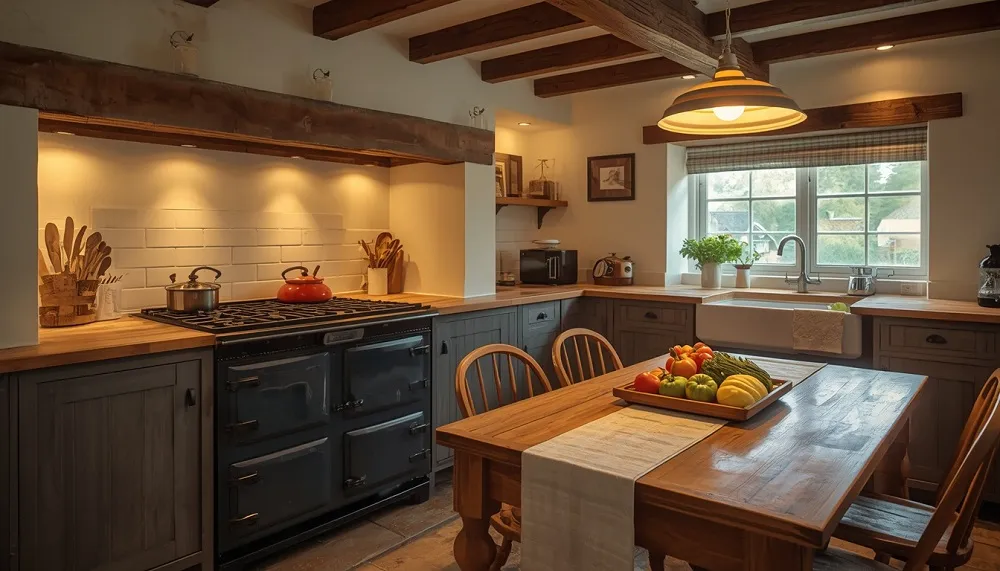
A large cottage looks expensive until you do the per-person maths, and then it often looks like the cheapest way to holiday as a big group. The right comparison is not the weekly price of a sleeps twelve cottage against the weekly price of a sleeps four cottage, which is a meaningless comparison, but the price per person per night, which is the figure that decides whether a cottage beats a hotel, a set of hotel rooms or two smaller cottages. Divide the weekly price by the number of guests and by seven nights, and compare that figure with a hotel room for two, and the large cottage usually wins by a wide margin, because the cost of the house is shared across twelve people instead of four.
An illustrative example shows the logic, and it is only illustrative, not a quoted price, so verify real prices with the provider before you budget. If a cottage that sleeps twelve costs 2,400 pounds for a week, that is 200 pounds per person for the week, or under 29 pounds per person per night, for a whole house with a kitchen, a garden and a games room. The same week in hotel rooms for twelve people, even at a modest rate, would cost several times that figure, and it would not include a kitchen or a shared living space. The example is deliberately simple, and real prices vary widely by region, season and features, but the structure is what matters: the more people share the house, the lower the cost per person, which is why a large cottage is often the best-value option for a big family, not the most expensive one.
Watch the extras, because they are where a large cottage bill grows. Cleaning fees, pet fees, refundable deposits, charges for logs or heating oil, and fees for a hot tub or for extra guests can add a meaningful sum to the headline price, and some providers charge per person above a certain party size. Ask for the full price, including every extra, before you book, and ask whether linen and towels are included, since some large cottages charge for linen per person. Our cottage holiday cost guide covers hidden extras, seasonal pricing and a worked cottage-versus-hotel comparison for a family, and all prices there are indicative, to be verified with the provider. For a large group, the other cost worth planning is food: a shared kitty, a rota for cooking, and one big online food shop delivered to the cottage will save more money, and more arguments, than any discount on the cottage itself.
A Booking Checklist for Large and Family Cottages
Use this checklist on every cottage you shortlist, and do not book a cottage that fails more than one item. First, the beds: get the sleeping arrangement room by room, with bed sizes, and name who sleeps where. Count every person, including babies and toddlers, against the sleeps number, and check that every bedroom has a door, a window and space for luggage. Second, the bathrooms: one bathroom for every four to five guests, with a second WC once the party passes eight. Third, the living space: seats for everyone in the main room, a second space for splitting up, a dining table that seats the whole party at once, and a kitchen with a big fridge, a dishwasher and crockery for the full group.
Fourth, the outside: a fully enclosed garden with a latching gate if children or dogs are coming, photographed fences rather than a promise, and parking for every car in the party. Fifth, the practicalities: a ground-floor bedroom for anyone who needs one, stair gates if a toddler is coming, a drying room or boot room for a wet week, and heating that can warm a big house in the season you are travelling. Sixth, the booking itself: confirm the bed layout in writing, read the cancellation terms, check what happens if the party shrinks, ask for the full price including every extra, and confirm whether linen, towels, a travel cot and a high chair are included. Seventh, the timing: for a cottage sleeping twelve or more in a school holiday, start six to twelve months ahead, and keep two or three shortlisted properties in play until one is booked.
Finally, remember what the holiday is for. A large cottage holiday works when the house lets a big group be together without being on top of each other, and that is a question of layout, not of size alone. A cottage that sleeps twelve with five bedrooms, three bathrooms, two living rooms, a dining table for twelve and a fenced garden will give a better week than a cottage that sleeps sixteen with three bedrooms, one bathroom and one living room, however grand the photographs look. Choose the house that passes the ratios, book it early, confirm the details in writing, and the cottage will do what it is supposed to do: sleep everyone together, comfortably, under one roof.
Frequently Asked Questions
What does “sleeps 6” mean in a holiday cottage?
It means the cottage can hold a maximum of six people, including babies and toddlers, and that limit is set by fire safety rules and insurance, so it cannot be exceeded. It does not guarantee six proper beds: the six may include a sofa bed or a pull-out bed, so always ask for the sleeping arrangement room by room, with bed sizes, before you book.
Do babies and toddlers count towards the sleeps number?
Yes. Every person counts, including a baby in a travel cot, because the sleeps number is a head count for safety and insurance, not a count of beds used. A family of four adults, one child and one baby has reached the limit of a cottage that sleeps six. Check whether a travel cot is supplied and whether there is floor space for one in a bedroom.
How many bathrooms should a cottage for 10 people have?
Aim for one bathroom for every four to five guests, so two bathrooms as a minimum for ten people, with a third WC or en suite if you can find one. A single bathroom for ten guests means queues every morning and evening, so treat the bathroom count as a deal breaker, not a detail.
Can we book two cottages next to each other for one big group?
Yes, and for parties above twelve it is often the better option. Many estates offer neighbouring cottages that can be booked together, sometimes with an interconnecting door or a shared dining barn, so the group eats together but sleeps in separate, properly equipped homes. Confirm the cottages are genuinely next to each other, that the gardens connect, and that both are free for the same dates.
How far ahead should I book a large cottage for school holidays?
For a cottage sleeping twelve or more, start six to twelve months ahead for school holiday weeks, since there are few large cottages and every family wants the same dates. Properties sleeping eight to ten can sometimes be found three to six months out, but the best options go first. Midweek and out-of-season dates offer far more choice and lower prices.
Are large family cottages usually dog-friendly?
Many are, but the dog rules need checking separately, including how many dogs are allowed, the pet fee, and whether the garden is genuinely enclosed. A large cottage with a fenced garden suits a dog well, but a large cottage near livestock or with an open garden may not. Read our dog-friendly cottage guide for the full checklist before you book a dog into a large family stay.


