Accessible Cottage Holidays in the UK: What to Check Before Booking
An accessible cottage holiday in the UK starts with a simple problem: the words in a listing do not always mean what you think they mean. One cottage can call itself wheelchair accessible because it has a ramp at the front door, while another earns the same label with a wet room, wide doors, and a ground-floor bedroom. This guide explains how to read past the label, what to ask before you pay, and how to choose a cottage that fits your access needs rather than one that merely sounds accessible.
The advice here is about choosing the cottage, not listing properties. If you are new to self-catering, start with our self-catering accommodation guide, which explains what is included and what to bring. Our vacation rental guide also has a section on accessibility features, which is a useful second read once you know what to look for.
What “Accessible” Really Means in a Cottage Listing
The first thing to understand is that there is no single legal definition of an accessible cottage, and listings use several different phrases that sound similar but mean different things. Step-free access usually means you can get into the property without climbing a step, often by a ramp or a level threshold, but it says nothing about the rooms inside. Level access means the same thing in most listings, a route with no steps, though it can still include a steep slope or loose gravel. Wheelchair accessible is the broadest label of all, and it can mean anything from a wide front door to a fully adapted cottage, which is why it is the least reliable phrase in a listing.
It helps to think in levels rather than labels. At the first level, a cottage has step-free entry only, which suits a guest who can manage a few steps inside. At the second level, it also has a ground-floor bedroom and bathroom, so the rooms you need are all on one floor. At the third level, it is fully adapted, with wide doors, turning space, a wet room, and room for equipment such as a hoist. Ask the owner which level their cottage actually reaches, and do not accept the label on its own as an answer. UK equality law asks accommodation providers to make reasonable adjustments for disabled guests, but what is reasonable varies from one old stone cottage to another, so the checks in this guide still matter.
Start With the Access Statement
The single most useful document in an accessible cottage search is the access statement, a written description of the property that covers entrances, door widths, room layouts, bathrooms, parking, and outdoor areas. Quality-assured accommodation is expected to provide one, and most owners who take access seriously will have one on their website or will send you a copy by email. If an owner cannot provide one, or will not answer specific questions about measurements, treat that as a warning sign and keep looking.
Read the access statement against your own needs, not against the listing photographs. Ask for the measurements that matter to you: the width of the narrowest doorway on your route, the turning space in the bedroom and bathroom, the height of the bed, and the size of the shower area. Ask for a floor plan and recent photographs of the entrance, the bathroom, and the bedroom, since photographs show steps, thresholds, and tight corners that words often hide. A good owner will welcome these questions. If the answers are vague, or if the owner seems surprised to be asked, the cottage is probably not as accessible as the listing suggests.
Step-Free Access: From the Car to the Front Door
Access starts before the front door, at the car. Check where you will park and how far it is from the space to the entrance, since a space fifty metres away across gravel is very different from a space beside the door on a firm, level surface. VisitEngland guidance for accessible self-catering uses parking within fifty metres of an entrance, reached by a step-free route with a firm and reasonably smooth surface, as one of its key features. Ask whether there is a drop-off point right at the door, and whether the parking surface is tarmac, paving, or concrete rather than gravel or grass.
Then walk the route in your mind, from the car to the rooms you will use. Is there a ramp, and if so, how steep is it and does it have a handrail? Is the threshold at the front door level, or is there a small step that a wheelchair cannot cross? Are there steps between the entrance and the bedroom, the bathroom, and the kitchen, and if the cottage is on two floors, is there a lift or a stairlift? A wide door with a lever handle and a light action is easy to use, while a heavy door with a knob handle can be a barrier on its own. These details rarely appear in photographs, so ask about them directly, and ask for the measurements rather than a general reassurance.
Bedrooms, Bathrooms and Turning Space
The bedroom and the bathroom are where most accessible stays succeed or fail, so check them first. A wheelchair-accessible bedroom needs step-free access, a door wide enough for your chair, and enough turning space beside the bed, and VisitEngland guidance uses a turning space of 1500 millimetres by 1500 millimetres as its reference figure. Ask for the actual measurements of the room you will sleep in, not just the largest bedroom in the cottage, and check the bed height and whether there is space beside the bed for a wheelchair, a hoist, or a carer. An electric profiling bed, which adjusts in height and position, can make transfers much easier, so ask whether one is available in the room you will use.
In the bathroom, the key question is whether you can wash safely and independently. A wet room, with level access, good drainage, and plenty of turning space, is the most flexible arrangement, and a shower chair is often available on request. A bath with a shower over it is much harder to use from a chair, and a standard shower cubicle with a raised tray is usually not usable at all. Ask about grab rails, the position of the toilet and the space beside it for transfer, the height of the basin, and whether the mirror and controls are reachable from a seated position. If you need a hoist, ask whether the cottage has a ceiling track hoist or a mobile hoist, and which rooms it can reach. Families booking together should also read our large and family cottage holidays guide, since space and bathroom numbers matter just as much when a carer is part of the party.
The Kitchen, Living Room and the Rest of the Cottage
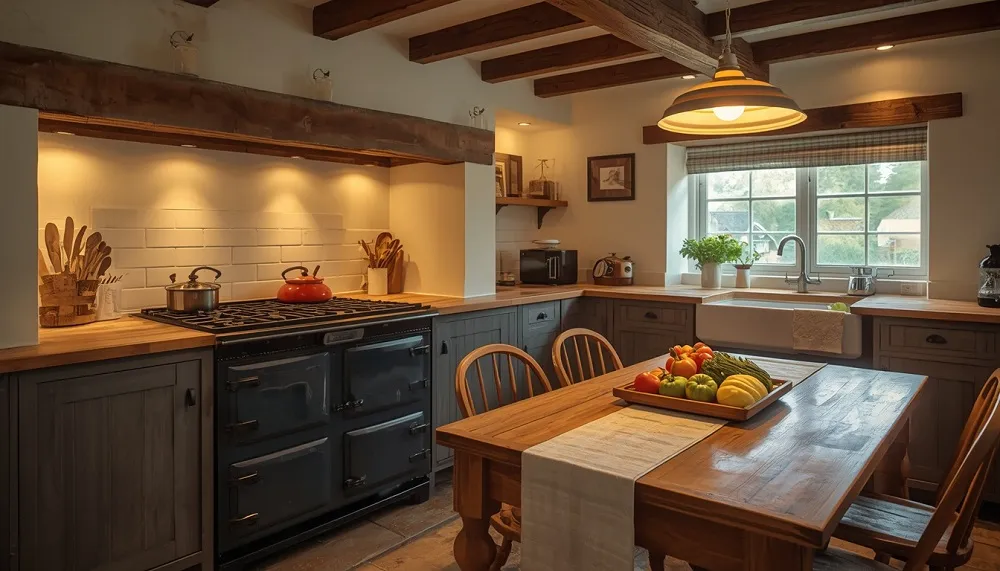
Once the bedroom and bathroom work, check the rooms where you will spend the day. A wheelchair-accessible kitchen needs step-free access, a door at least 750 millimetres wide under VisitEngland guidance, and enough space to turn and reach the things you need. Lowered worktops and a lowered sink make a real difference, and appliances should be reachable without stretching. Ask whether a wheelchair fits under the dining table, since a solid base or central pedestal can make it unusable from a chair.
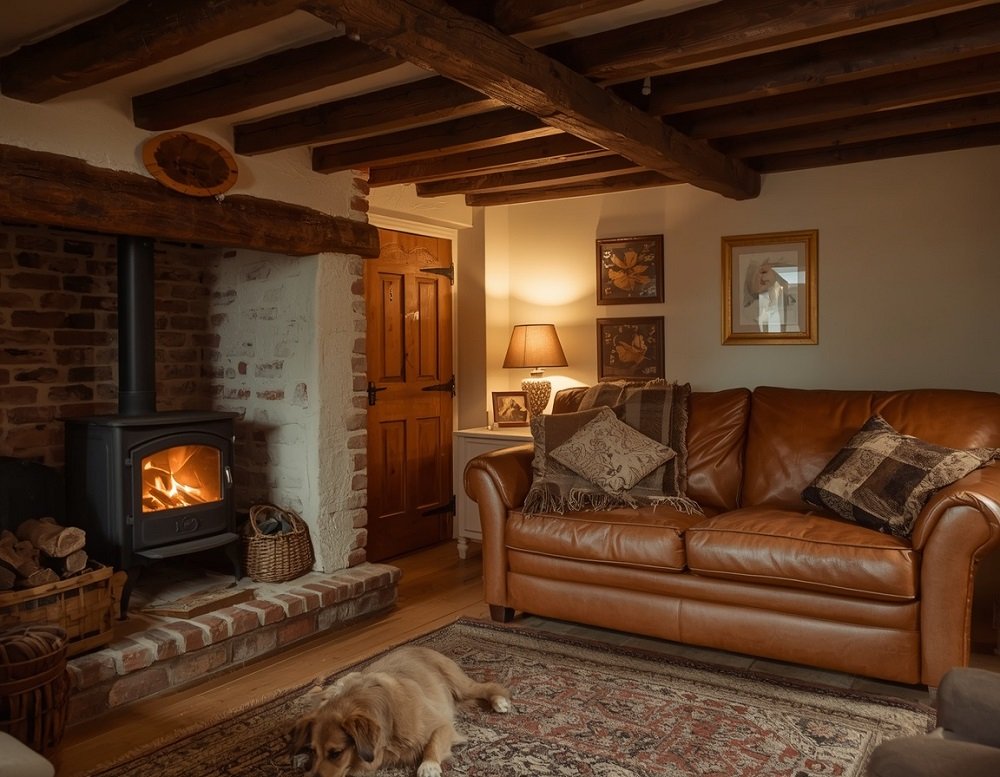
The living room matters too, especially on a cottage holiday spent indoors in the evenings. Check there is space to move between the seating and the door, and that heating controls, light switches, and sockets are reachable. Stairs deserve a question of their own: if the only bathroom is upstairs, or the only quiet room is upstairs, the cottage will not work for a guest who cannot climb stairs, however beautiful the view from the landing.
Equipment, Carers and Assistance Dogs
Many accessible cottages provide equipment that can make the difference between a manageable stay and a difficult one. The most useful items are a hoist, a shower chair, a bed rail, and an electric profiling bed, and some owners will also lend a commode or a bath board. Ask exactly what is provided, whether it is already in the cottage, and whether there is any extra charge. If you need equipment the cottage does not provide, ask whether a local hire company delivers to the cottage, and arrange it before you travel.
If a carer travels with you, check the cottage sleeps everyone with a proper bed for the carer rather than a sofa, and that the booking terms allow an extra guest without a surprise charge. Assistance dogs are welcome in self-catering cottages, but it is still worth telling the owner in advance so the cottage can be prepared. Our dog-friendly cottage holidays guide covers the practical questions about dogs in cottages, including enclosed gardens and nearby walks.
Outside Spaces, Gardens and Getting Out
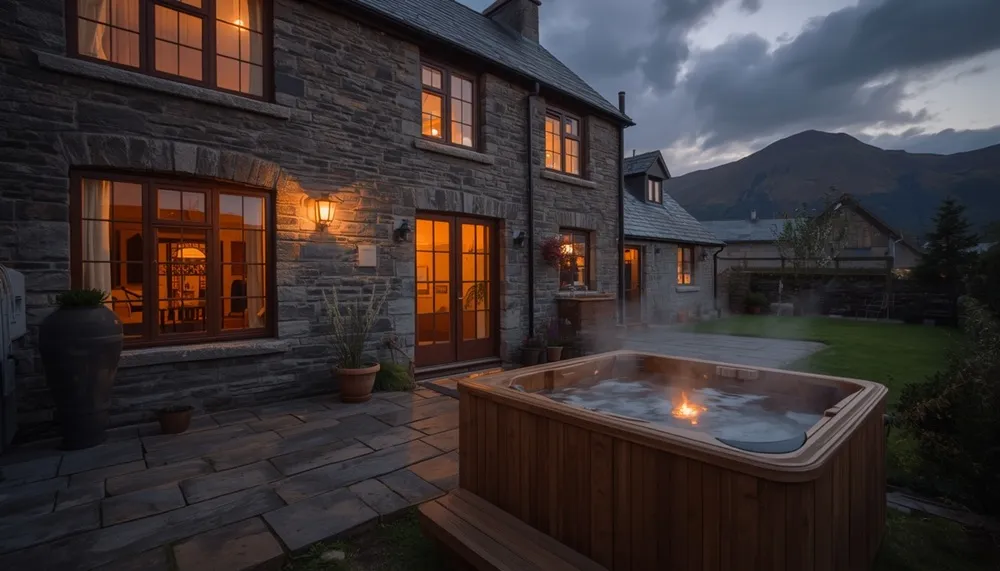
A cottage holiday is not only about the rooms indoors, so check the outside spaces too. A garden reached by steps or across a sloping lawn is not usable from a chair, while a level patio with a firm surface and a ramp from the back door is. Ask whether the garden furniture is usable from a chair, and whether the paths around the cottage are paved or gravel. If the cottage has a hot tub, ask how it is reached and whether there are steps into it, since a hot tub entered only by climbing steps is not accessible however inviting it looks.
Getting out matters just as much as staying in. Ask the owner about level walks near the cottage, accessible beaches, and attractions with step-free access, and whether the local pub and shop are reachable without a car. A cottage near a flat coastal path or a level riverside walk gives you somewhere to go every day, while a cottage at the top of a steep lane can leave you stranded. Our walking holidays from a UK cottage base guide covers how to judge walks from a cottage, and the same questions about paths, surfaces, and gradients apply.
Best Regions and Cottage Types for an Accessible Stay
Some regions and cottage types suit an accessible stay better than others. Single-storey cottages, barn conversions with all rooms on the ground floor, and modern purpose-built accessible cottages are the easiest to adapt, while traditional two-storey stone cottages with steep stairs and small bathrooms are the hardest. A bungalow or a ground-floor apartment can be an excellent choice, and it is worth searching specifically for those words rather than for accessible as a general label.
Flat and level ground helps. Coastal areas with promenades and level beaches, such as parts of the south coast and East Anglia, are often easier than steep hill country, though a coastal cottage still needs the same checks for steps, slopes, and parking. Our coastal cottage holidays guide covers what to check in a seaside stay, including access to the beach itself. Market towns with level streets, shops, and pubs nearby also work well. Whatever region you choose, book early: genuinely accessible cottages are few, and the best ones are booked months ahead, especially for school holidays and summer weekends.
How to Check Before You Book: A Short Checklist
Use this checklist on every accessible cottage before you pay a deposit, and get the answers in writing. First, the documents: ask for the access statement, a floor plan, and recent photographs of the entrance, the bedroom, and the bathroom. Second, the measurements: the narrowest doorway on your route, the turning space in the bedroom and bathroom, the bed height, and the size of the shower area. Third, the route: parking position and surface, drop-off point, ramps, thresholds, and any steps between the rooms you will use. Fourth, the bathroom: wet room or bath, shower chair, grab rails, toilet transfer space, and hoist availability.
Fifth, the rest of the cottage: kitchen access and worktop heights, dining table clearance, heating controls, and stairs. Sixth, the equipment and the party: what is provided, what you need to hire, carer sleeping arrangements, and assistance dog arrangements. Seventh, the outside: garden access, paths, hot tub steps, and level walks nearby. Eighth, the booking terms: deposit, cancellation terms, and what happens if the cottage is not as described when you arrive. Book as early as you can, since accessible cottages are scarce. See our guide to when to book a UK cottage holiday for lead times and the cheapest months to travel.
Frequently Asked Questions
Do all accessible cottages have wet rooms?
No. Some have a wet room, some have a walk-in shower, and some have a bath with a shower over it. Ask what the bathroom actually contains, and whether there is a shower chair, before you book.
What door width do I need for a wheelchair?
It depends on your chair, so measure it and ask for the actual doorway widths. As a reference, VisitEngland guidance uses 750 millimetres as the minimum door width for a wheelchair-accessible kitchen, so always ask.
Can I bring a carer or an assistance dog?
Yes. Check that the cottage sleeps everyone with a proper bed for the carer, and tell the owner about an assistance dog in advance so the cottage can be prepared.
What if the cottage is not as described when I arrive?
Raise it with the owner or the agency straight away, in writing, and keep a note of what was promised. Check the cancellation terms before you book, and keep the access statement and any emails that describe the facilities.
Do accessible cottages cost more?
Not usually for the cottage itself, though equipment hire and a carer place can add to the total. See our guide to how much a UK cottage holiday costs for price ranges by region, size, and season, and treat every figure as indicative.
An accessible cottage holiday works when the cottage fits the guest: step-free from the car to the front door, a bedroom and bathroom on the same level with room to move, and honest answers to the questions in this guide. Ask for the access statement, check the measurements, and book early, and the cottage will take care of itself.