
Cottage Kitchen Essentials for a Self-Catering Stay
A self-catering cottage gives you a whole kitchen instead of a hotel breakfast room, and that freedom is the point of the stay. You cook what you want, when you want it, and pack a lunch for the walk instead of hunting for a cafe at midday. The kitchen is also the part of a cottage where first-time guests get caught out most often, because what is provided varies from one cottage to the next, and the gaps only show up when you are already unpacking.
The short answer is that most UK cottages provide the equipment and very little of the food. You will usually find an oven, a hob, a fridge, a kettle and a toaster, plus pots, pans, plates and cutlery. You will almost never find cooking oil, salt, coffee or cling film waiting for you. If you are new to self-catering, start with our self-catering accommodation guide, which explains what is normally included, and read our guide to how much a UK cottage holiday costs before you plan the food budget, since every figure there is indicative and should be verified with the provider.
What Is Usually Already in a Cottage Kitchen?

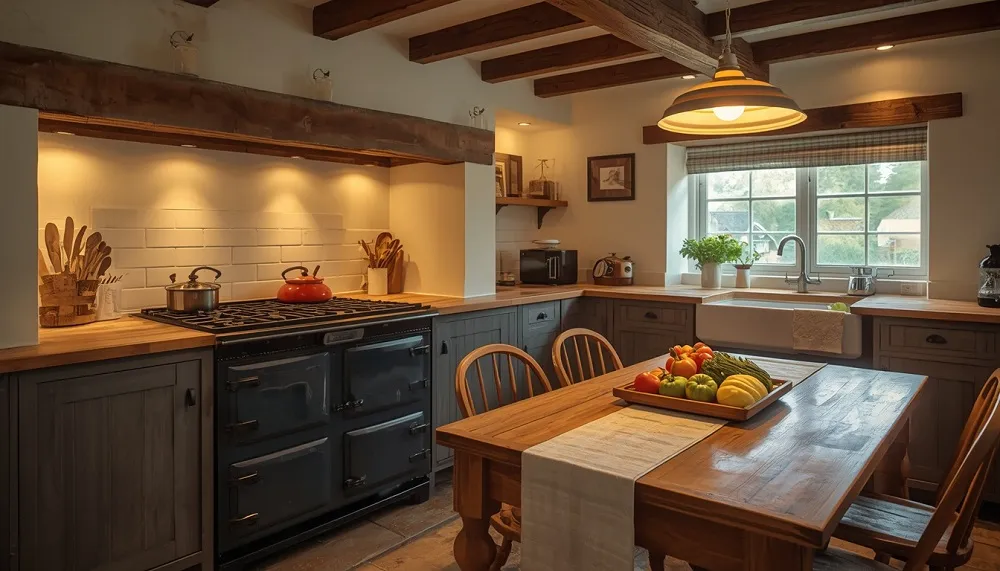
A cottage described as having a fully equipped kitchen should have the basics for cooking proper meals, not just making tea. Expect an oven and hob, a fridge with some freezer space, a kettle, a toaster and usually a microwave. The cupboards should hold saucepans, a frying pan, a baking tray, a chopping board, plates, bowls, mugs, glasses and cutlery for the number of guests the cottage sleeps. Many cottages also have a dishwasher and a washing machine, and some have a slow cooker or a coffee machine, but those are extras rather than guarantees, so check the listing before you count on them.
What varies most is quality and quantity rather than the list itself. One cottage has three good saucepans and a sharp knife, the next has one thin pan and a blunt knife that struggles with a tomato. The number of place settings should match the sleeps number, but a cottage that sleeps eight sometimes seats only six at the table, so check the dining space as well as the kitchen. Bedding and towels are usually included in the price, though a few budget cottages still ask you to bring your own or charge for a linen pack. Our self-catering guide covers towels, bedding and heating in detail.
The Pantry Staples to Pack First
The biggest gap in almost every cottage kitchen is the pantry. Cottages are cleaned between guests, and anything left behind by the last party is usually thrown away, so the cupboards start empty. That means no oil for the frying pan, no salt for the pasta water, and no coffee for the first morning. Guests who arrive without these basics end up making a special trip to the shops before they have even unpacked, which is a poor start to a holiday.
Pack the staples first, before the fancy ingredients. A small bottle of cooking oil, salt and pepper, tea and coffee in amounts that cover the whole stay rather than just day one, sugar, a couple of your favourite spices, and a few stock cubes will cover most meals. Some owners leave a starter pack with tea, coffee, sugar and milk, and a few leave local treats such as biscuits or jam, but treat that as a welcome extra rather than something to rely on. If the listing mentions a welcome pack, ask the owner exactly what is in it, since one owner’s welcome pack is a box of groceries and another’s is two tea bags.
- Cooking oil and a small bottle of vinegar for dressings and frying.
- Salt, pepper and two or three spices you actually cook with.
- Tea, coffee and sugar for the whole stay, not just the first morning.
- Stock cubes and a packet of pasta or rice for a first-night meal.
- Cling film and foil, which cottages almost never provide.
- A few lidded containers for packed lunches and leftovers.
The Small Tools Worth Bringing
Beyond food, a small bag of kitchen tools solves the most common frustrations. The single most useful item is a decent sharp knife, wrapped safely in a tea towel for the journey, because cottage knives are often blunt and basic. A roll of foil, some cling film and two or three lidded containers make packed lunches and leftover roasts far easier, and they weigh almost nothing. If the cottage has a dishwasher, bring dishwasher tablets, since they are not always provided, and if it does not, bring washing-up liquid and a sponge, since cottages with no starter supply leave you buying a full-size bottle for a week’s use.
Coffee drinkers should plan ahead. Most cottages provide a kettle and sometimes a cafetiere or a filter machine, but the type varies, so bring your own coffee in a form that matches what is there, or bring your own cafetiere and beans. The same logic applies to a favourite mug and a tea towel or two, since cottages usually provide one tea towel or none. Ask the owner for a current inventory list before you travel, since most owners are happy to email one.
Cooking for a Group: What Changes

Cooking for two is easy in any cottage kitchen. Cooking for eight or ten is a different job, and the kitchen is where a large-group stay succeeds or struggles. Check that the oven is big enough for a joint, that there are enough large pans for a full breakfast, and that the fridge and freezer can hold a week’s shopping for the whole party. A cottage that sleeps ten but has one small frying pan and a single oven shelf will slow every meal down, so ask the owner about pan sizes and oven capacity before you book.
Seating matters as much as cooking space. Count the dining chairs against the number of guests, and check whether everyone can eat together or whether the group will split across a table and a sofa. If anyone in the party has an allergy or a dietary requirement, tell the owner in advance and bring separate boards and utensils if you need them, since a shared kitchen needs a little planning to keep everyone safe. Our large and family cottage holidays guide covers the space, bedroom and booking questions for bigger parties, and our cottage versus hotel guide for families explains when cooking for yourself beats eating out every night.
Your First Night and First Shop
Plan the first night’s meal before you leave home, because arrival day is the worst time to improvise. Choose something simple that uses the staples you packed, such as pasta with a jar of sauce or a one-pot stew, and bring the ingredients with you rather than relying on finding a shop that is still open. Check where the nearest supermarket is before you travel, and whether it is a short drive or a walk, since a cottage down a narrow lane can be further from the shops than the map suggests.
The first shop is also the moment to stock up properly. Buy for the whole stay where you can, including breakfast supplies, packed lunch food and the cleaning basics the cottage may not provide, so you are not driving to the shops every day. Farm shops and village stores near the cottage often have better bread, meat and local produce than a supermarket, and they are worth a visit even if the main shop comes from elsewhere. If you are staying near Dartmoor, our Devon and Dartmoor guide covers farm shops, pubs and cream teas nearby, and our cost guide explains how to budget for food alongside the rental price.
What to Check in the Listing Before You Book
Most kitchen disappointments are avoidable, because the answers are in the listing or one email away. Read the listing photos closely, since they usually show the oven, the hob and the size of the kitchen, and look for a dishwasher, a washing machine, a freezer and the dining table. If the photos do not answer your question, ask the owner directly, since only the owner knows whether the coffee machine takes pods, whether there is a high chair for a toddler, or whether the freezer is a drawer or a full compartment.
Asking the owner is also the fastest way to confirm what is included and what is not, and it is one of the real advantages of dealing with the owner rather than a platform. Our guide to booking direct versus through an agency explains how to ask these questions and what the answers tell you about the stay. If you would rather not cook at all, our self-catering versus bed and breakfast guide compares the two stays so you can choose the right one before you book.
- Is there a dishwasher, a washing machine and a tumble dryer, and are tablets or detergent provided?
- How big is the oven, and are there enough large pans for the whole party?
- What type of coffee machine is there, and should I bring pods, beans or ground coffee?
- Is there a freezer, and how much space does it have for a week’s shopping?
- Are there a high chair and a cot if you are travelling with a baby or toddler?
- Can the owner email a current kitchen inventory list before you travel?
What Not to Pack
Just as important as what to bring is what to leave at home. Do not pack pots, pans, plates, cutlery, a kettle or a toaster, since every self-catering cottage provides those as standard, and they take up car space you will need for food and walking boots. Pack the food and the small tools, and let the cottage provide the equipment.
Frequently Asked Questions
Do self-catering cottages provide towels and bedding?
Most do. Fresh bed linen and towels are normally included in the rental price, but a few budget cottages still ask you to bring your own or charge extra for a linen pack, so check the listing before you travel. Beach towels are almost never provided, so bring your own if you plan to visit the coast or use a hot tub.
Is there a dishwasher in most self-catering cottages?
Many modern cottages have one, but it is not universal, especially in smaller or older properties. If a dishwasher matters to you, check the listing photos or ask the owner, and bring your own tablets either way, since they are not always provided even where a dishwasher is fitted.
Should I bring my own coffee?
Yes. Bring coffee in a form that matches the machine in the cottage, or bring your own cafetiere and beans so you are not dependent on what is there. Most cottages provide a kettle and tea bags for the first cup, but proper coffee is rarely guaranteed.
What if the cottage kitchen has no oven?
A few small cottages and studio conversions have only a hob and a microwave, which is fine for simple meals but not for roasts or baking. Check the listing before you book if you plan to cook properly, and plan one-pot and hob meals if the kitchen has no oven.
Do I need to bring cleaning supplies?
Bring the small basics and buy the rest locally. A sponge, washing-up liquid and dishwasher tablets cover the first days, and most cottages provide a starter amount. You do not need to bring a full set of cleaning products, and the owner or agency will tell you what is provided if you ask.
A well-packed kitchen bag is the difference between cooking happily from the first night and spending your first evening driving to the shops. Pack the staples, bring one sharp knife and a few small tools, check the listing for the dishwasher, oven and coffee machine, and ask the owner for an inventory list before you travel. For the full picture of what a self-catering stay includes, from towels to arrival days, read our self-catering accommodation guide next.
