
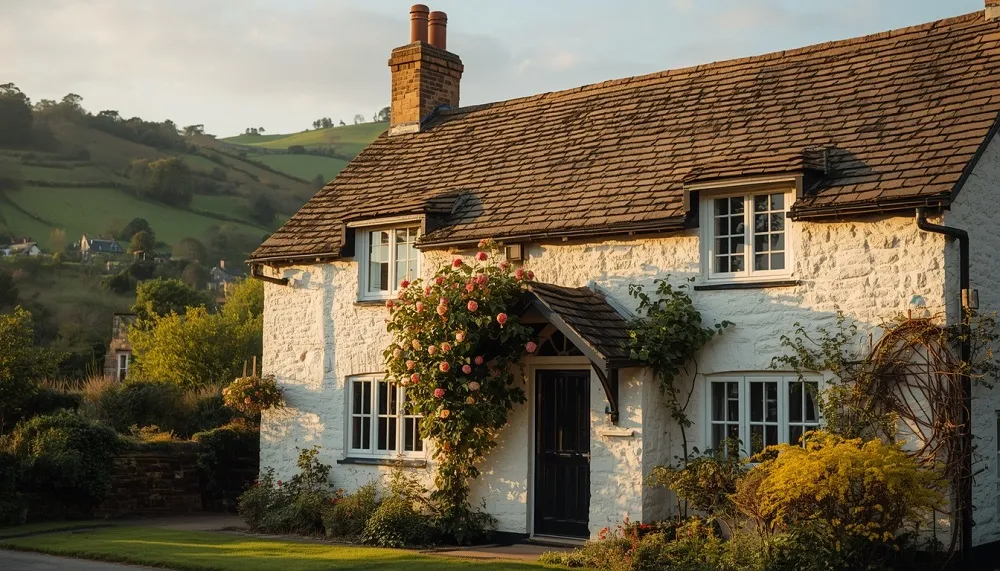
Christmas Cottage Holidays in the UK: What to Check Before Booking a Festive Break
A Christmas cottage holiday in the UK sounds simple: a stone cottage, a lit fire, a tree in the corner, and the whole family together for a few days. The reality is a little more demanding, because Christmas is the one week of the year when the small print matters most. Shops close, trains stop, minimum stays stretch to a week, and a cottage that works beautifully in June can feel very different on a dark, cold Christmas evening. This guide explains what to check before you book, so the festive break you picture is the one you actually get.
If you are new to self-catering, start with our self-catering accommodation guide, and read our guide to how much a UK cottage holiday costs for price ranges by region, size, and season. Treat every figure as indicative, and always verify the price with the provider before you book.
Why Christmas in a Cottage Works, and When It Does Not
A cottage suits Christmas because the holiday itself is a stay-in occasion. The best moments happen indoors: cooking together, playing games, walking off lunch, and sitting by the fire in the evening. A cottage gives you a kitchen of your own, a living room big enough for everyone, and nobody else’s timetable. For a family that wants to cook its own Christmas lunch, open presents in its own space, and let children and dogs run around without worrying about other guests, it is hard to beat.
It does not suit everyone. If you want a restaurant to cook for you, a bar downstairs, and no washing up, a hotel is the better choice. If nobody in the party wants to cook, shop, or light a fire, a cottage becomes work rather than a holiday. A cottage also suits a group that gets on well in close quarters: sharing bathrooms, sharing a kitchen, and spending long evenings in one room together is a joy for some families and a test for others. Be honest about which kind of group you are before you book.
The 2026 Dates That Decide Everything
In 2026, Christmas Day falls on a Friday, 25 December, and Boxing Day falls on a Saturday, 26 December, so the Boxing Day bank holiday moves to Monday, 28 December. New Year’s Day is the following Friday, 1 January 2027. That calendar shapes the whole festive cottage market: demand is concentrated on Thursday 24 December to Monday 28 December, and the days between Christmas and New Year, often called Twixmas, are much easier to book.
The dates also decide how you travel. There are no National Rail trains on Christmas Day and very few on Boxing Day, and engineering work is often planned for the days around them. If you are not driving, plan to travel by 24 December and return on 27 December or later. If you are driving, remember that a remote cottage lane can be very different in snow or ice from the way it looks in a summer photograph, so ask the owner what happens to the road in bad weather.
How Early to Book, and What Is Still Available
Christmas week is one of the most expensive and most competitive weeks of the cottage year, and the biggest cottages go first. Large country houses and cottages that sleep ten or twelve are usually booked months ahead, often before the summer ends. Family-sized cottages that sleep six to eight follow, and the cottages that stay available longest are the small ones for two. If you left it late, a small cottage for two, a shorter stay, or slightly off-peak dates are often the better holiday anyway.
If Christmas week itself is full, look at the days after it. Stays starting on 27 or 28 December and running into the New Year are much easier to find, and short breaks become possible again once the Christmas minimum-stay rules relax. The same applies to the weekend before Christmas, which suits a family that wants a festive break without the pressure of Christmas Day itself. See our guide to when to book a UK cottage holiday for lead times and the cheapest months to travel, and book as early as you can for the following Christmas once this one is over.
Minimum Stays, Changeover Days and Arrival Times
The first thing to check in any Christmas listing is the minimum stay. Three, four, or seven nights is common across Christmas, and a cottage that normally allows two-night weekend breaks may insist on a full week over the festive period. A seven-night stay starting on a Friday in 2026 means arriving on Christmas Day itself, so check that the owner will let you arrive then, and what time the cottage is ready.
Arrival and departure times matter more at Christmas than at any other time of year, because the whole party arrives at once with food, presents, and luggage. Check the arrival time before you fall in love with the cottage, and check the departure time too: an early checkout on the last morning, with children and a car to pack, means packing the night before. If the cottage has a key safe, ask for the code and the instructions in advance, since there may be nobody around to help on Christmas Day itself.
What Festively Decorated Really Means
Many Christmas cottages are advertised as fully decorated, which can mean anything from a tree and a wreath to a few tinsel strands on the mantelpiece. If decorations matter to you, ask exactly what is provided. Is there a Christmas tree, and is it real or artificial? Are there lights, a wreath, and decorations in the living room, or only in the photographs? Some owners decorate beautifully and include a welcome hamper, while others put up a small tree and leave the rest to you.
If you want to bring your own decorations, check that too. A cottage with a real open fire and a real tree needs sensible care, and some owners ask guests not to hang decorations from beams or light real candles. Ask whether there is space for a tree if none is provided, and whether you can bring your own. The same question applies to a welcome hamper: some cottages include one, some charge extra, and some provide nothing at all.
The Kitchen Test: Turkey, Oven and Dining Chairs
Christmas lunch is the hardest meal a cottage kitchen will ever cook, so test the kitchen against it. Holiday-let kitchens are usually fitted out for easy summer cooking, one big dish and a salad, not a turkey with all the trimmings. Check the oven: is it big enough for your bird, and is there a second oven or a separate grill for the rest of the meal? Check the hob: how many rings does it have, and will they all be free at the same time? Ask about roasting tins and serving dishes, since a cottage that sleeps twelve may still own only one small roasting tin.
Then count the dining chairs. A cottage that sleeps twelve has twelve places to lie down, which is not the same as twelve places to sit, and Christmas lunch is eaten sitting down, all at once, at one table. Count the chairs in the photographs, and check the table is big enough for the whole party with serving dishes on it. A cottage for ten without a dishwasher is not a holiday, it is a washing-up rota, so check there is a dishwasher and a washing machine too. A week with children is a week of muddy knees and damp towels, and a surprising number of cottages have neither machine.
Heating, Firewood and the Road In
Heating is the question most Christmas cottage guests forget to ask, and the one they regret most. Ask what heats the cottage, whether the fuel is included in the price, and whether the heating is on a timer or under your control. An old stone cottage with storage heaters behaves very differently from a modern barn conversion with underfloor heating, and a cottage that is warm by evening may be cold all morning. If the cottage has a log burner or an open fire, ask whether wood is provided or whether you are expected to bring your own. Finding firewood in the countryside over Christmas is harder than it sounds: the farm shop is shut, and a fireplace with nothing to burn is just a draughty hole in the wall.
Ask about hot water as well. A cottage that sleeps ten needs enough hot water for ten showers, and a small tank or a single combi boiler may not keep up when everyone showers before lunch. Ask about the road in, too. A remote cottage at the end of a single-track lane is charming in July and a real problem in ice, so ask whether the lane is gritted, whether there is somewhere safe to park off the road, and whether a normal car can manage it. If the cottage is on a steep hill, ask what happens when it snows.

Space for the Whole Family: Beds, Bathrooms and Sofas
Christmas brings the whole family at once, so count the rooms against the people, not against the listing headline. Start with the bathrooms: count them against the bedrooms before you book, because a cottage with four bedrooms and one bathroom will feel very different on Christmas morning from a cottage with a bathroom for every bedroom. Teenagers go into a bathroom the way other people go on holiday, and with them in the house a free bathroom is something you hear about but never see.
Then check the living space. Count the sofas, not just the seats in the photographs, and ask whether everyone can sit together in the evening without somebody perching on a dining chair. Check the bedrooms too: a double bed, two singles, and a sofa bed are not the same thing, and a child on a sofa bed in the living room means nobody can stay up late. Ask about bedding and towels, and take extra toilet paper with you: two rolls on the windowsill are a kind welcome and a wild underestimate, and on Christmas Day there is nowhere to buy more.

Christmas With a Dog
A dog makes a Christmas cottage break better, and it also makes the checks more important. Many cottages allow dogs but charge a fee per dog, so ask whether the fee is included or extra, how many dogs are allowed, and whether the garden is enclosed. An enclosed garden matters in winter, when it is dark by four in the afternoon and nobody wants to walk a dog down a country lane after dark. Ask whether the dog can be left alone in the cottage while you go out for a walk or a meal, since some owners do not allow it.
Winter changes the dog rules outdoors as well. Many beaches that ban dogs in summer allow them again from October to April, which makes a coastal Christmas walk with the dog one of the best parts of a festive break, but the dates vary from beach to beach, so check the local rules before you go. Village pubs are often dog-friendly in winter, which is worth knowing when the cottage feels small on a rainy afternoon. Take the dog’s bed, food, and a towel for muddy paws.
Best Regions for a Christmas Cottage Break
Some regions suit a Christmas cottage break better than others, and the choice depends on what your Christmas should feel like. The Cotswolds is the classic choice for a picture-book Christmas: honey-coloured stone villages, pubs with fires, and Bourton-on-the-Water’s floating Christmas tree in the river. The Yorkshire Dales and York suit walkers and market lovers, with York’s Christmas market and quiet dales walks. The Lake District suits a scenery-first break, with lakeside walks and fell views in low winter light.
The coast works well in winter too, when seaside towns are at their quietest. Pembrokeshire offers wild coastal walks without the summer crowds, and the grey seal pupping season runs into December on that stretch of coast. North Norfolk has crisp countryside walks, festive markets, and big events such as Holkham by Candlelight and the Thursford Christmas Spectacular, which runs from 10 November to 23 December 2026. The Scottish Highlands suit a loch-and-mountain Christmas with log fires, while Lincoln hosts one of the UK’s biggest Christmas markets. Wherever you choose, pick a base with a walkable village, a pub, and a shop, because at Christmas the cottage matters more than the attractions around it.

Frequently Asked Questions
When should I book a Christmas cottage?
As early as you can. Large cottages for Christmas week are usually booked months ahead, often before the summer ends. If you left it late, look for small cottages for two, shorter stays, or the days from 27 December onwards.
Can I arrive on Christmas Day itself?
Sometimes. Many cottages change over on a Friday or Saturday, and in 2026 a Friday changeover is Christmas Day, so check that the owner will let you arrive then and what time the cottage is ready.
Do Christmas cottages cost more?
Yes, Christmas week is usually one of the most expensive weeks of the year, and some owners add a festive premium or a minimum stay. Treat every price as indicative and verify it with the provider before you book.
Are dogs allowed in cottages at Christmas?
Many cottages allow dogs, but often for a fee per dog. Ask about the fee, the number of dogs allowed, and whether the garden is enclosed before you book.
What should I pack for a Christmas cottage stay?
Take the first day’s meals with you, since village shops and pubs keep short hours, plus extra toilet paper, firewood if it is not provided, and the dog’s bed and towels. Check what the cottage provides before you travel.
A Christmas cottage holiday works when the cottage fits the celebration: enough beds and bathrooms for the whole party, a kitchen that can cook Christmas lunch, heating and firewood sorted before you arrive, and a village with a pub and a shop within reach. Check the dates, the minimum stay, and the small print before you pay, and the cottage will take care of the rest.


