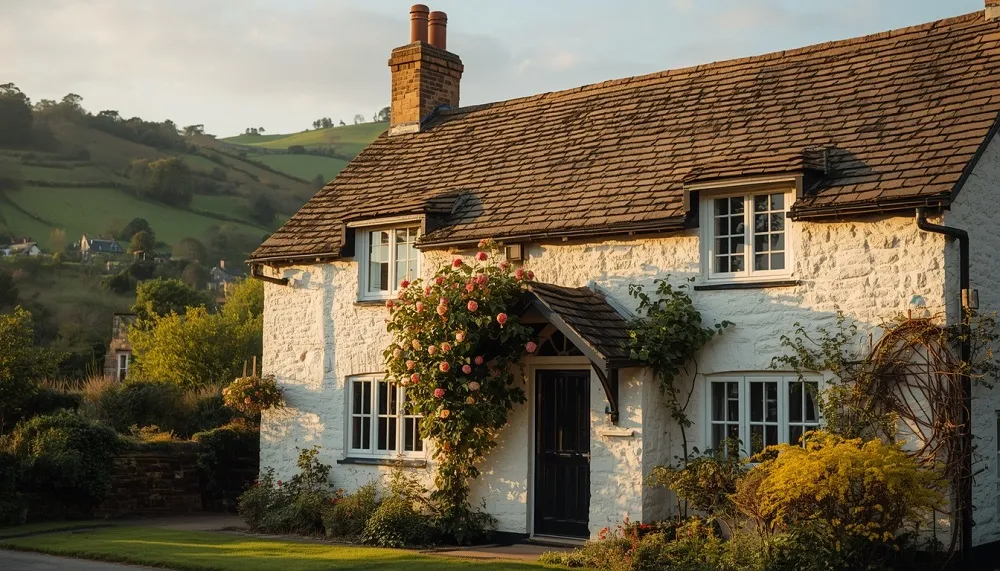

One of the first questions anyone asks when planning a cottage break is also one of the hardest to answer simply: how much does a UK cottage holiday cost? A cosy two-person bolthole in November and a sea-view house sleeping ten in August can differ by thousands of pounds, even though both are “a cottage holiday”.
This guide gives you indicative price ranges for cottage holidays across the UK — per night and per week — then explains exactly what moves those prices up and down: the region, the size, the season, the extras, and the hidden fees that catch people out. Use it to set a realistic budget, compare quotes fairly, and spot where the real savings are.
A note on the figures in this guide: every price below is an indicative typical range based on the sort of prices you will commonly see on the UK cottage market. They are not guaranteed prices, not quotes, and not statistics from any named source. Actual prices vary by property, dates and provider, so always verify the total with the owner or agency before you book.
It is written for anyone budgeting a cottage holiday — couples, families and groups sharing a large house, first-timers and seasoned bookers alike. Throughout, “indicative” means the range you will most commonly encounter when browsing: a useful anchor for budgeting, not a promise of what any specific property will charge on your dates.
Quick Answer: What a UK Cottage Holiday Typically Costs
If you just want the headline numbers, here they are. These are indicative typical ranges for a standard, well-presented cottage booked for typical dates — not the cheapest or the most luxurious on the market:
| Cottage size | Typical per-night range | Typical 7-night range |
|---|---|---|
| Small cottage for 2 | £85–£180 | £450–£950 |
| Family cottage, sleeps 4–6 | £140–£300 | £700–£1,800 |
| Large cottage, sleeps 8+ | £250–£600+ | £1,200–£4,000+ |
Read those as the middle band of the market. A basic one-bedroom cottage out of season can fall below these ranges, while a designer coastal property with a hot tub in August can sail well above them. The per-week figures are not simply the per-night figure multiplied by seven, because weekly bookings almost always work out cheaper per night than short stays — more on that below.
The single most useful habit when comparing cottages is to convert every quote into a per-person-per-night figure: the total cost of the stay divided by the number of guests and the number of nights. A £1,400-a-week cottage sleeping eight is £25 per person per night — cheaper than most B&Bs — while the same weekly price for two people is £100 per person per night. Keep that arithmetic handy; the rest of this guide will make much more sense with it.
One more pricing basic: UK cottage prices are generally quoted inclusive of VAT where VAT applies, and the weekly price usually runs from a set changeover day, often Friday or Monday. If a quote looks dramatically cheaper than everything else, check whether it covers the full stay or just part of it — and whether cleaning, linen and fees sit on top.
What Changes the Price of a Cottage Holiday
Five factors do almost all of the work in deciding what you will pay.
Location. Region is the biggest single driver. National parks, famous coastlines and honeypot villages command a premium because demand is deep and supply is limited. Two otherwise identical cottages — one in the Cotswolds, one in a less-visited part of Wales — can easily differ by 30–50% for the same week. Within a region, the exact village matters too: a cottage on the harbour front costs more than one a mile inland.
Season. School holidays, bank-holiday weekends and the August peak can double — occasionally triple — the price of the same property compared with a January week. Shoulder months such as May, June and September often give you the best balance of weather, prices and availability.
Size and sleeping capacity. Price rises with the number of bedrooms, but not in a straight line. Each extra bedroom typically adds proportionally less than the one before, which is why large cottages are such good value when shared between several households.
Features and finish. A hot tub, a sea view, a log burner, an Aga, a games room, a big enclosed garden or a genuinely luxurious fit-out all add to the nightly rate. So does the intangible “look” of the property — interiors photographed for magazines rent for more than plain but comfortable equivalents.
Length of stay. Short breaks (typically 2–4 nights) carry a higher price per night than full weeks. Many owners price short breaks at roughly 60–70% of the weekly rate for three nights — a short-break premium, meaning you pay more per night for the convenience of a shorter stay, because the owner’s fixed costs (cleaning, laundry, changeover) are spread over fewer nights.
Two quieter factors also nudge prices. Booking channel matters: the same cottage can cost more on a large platform (where service fees apply) than booked direct with the owner. And property character plays a role — a converted barn with original beams or a thatched cottage with a famous view will out-price a modern, plain-but-comfortable house on the same street.
Cottage Holiday Costs by Region
Every region has its own price personality. These are relative positionings — where each area tends to sit compared with the national middle — rather than fixed prices.
Cotswolds — premium. Consistently one of the priciest cottage regions in England. Honey-stone villages, easy access from London and a deep bench of high-end properties keep demand high year-round. Expect to pay at or above the top of the indicative ranges, especially for character properties in famous villages.
Cornwall — premium, highly seasonal. August in Cornwall is about as expensive as UK cottage holidays get, with coastal properties commanding serious premiums. Outside school holidays, though, prices drop sharply, and Cornwall in May or October can be genuinely good value for what you get.
Lake District — premium. Britain’s most visited national park supports strong year-round demand. Lakeside and fell-view properties sit at the top end; villages a little off the main tourist circuit are noticeably cheaper.
Devon and Dartmoor — mid to premium. South Devon’s coast and the Dartmoor fringe are well established and priced accordingly, though generally a notch below Cornwall and the Cotswolds. Inland and north Devon offer some of the best value on the south-west peninsula. If you are considering this part of the world, our Devon self-catering cottage guide walks through the areas and what to expect from each.

Yorkshire Dales — mid, often good value. The Dales offer national-park scenery and proper walking country at prices that typically sit at or just below the national middle. It is one of the strongest value-for-money national parks for cottage stays. See our Yorkshire Dales cottage holiday guide for area-by-area detail.
Wales — mid to good value. Much of Wales — from Snowdonia and the Pembrokeshire coast to the Brecon Beacons and the Welsh borders — prices below the English honeypots for comparable quality. It is often where budget-conscious travellers find the most cottage for their money, though the most famous coastal spots have their own peak-season premiums.
Within every region, micro-location creates its own price tiers. A cottage with a sea view, on the harbour, or in the village everyone photographs will sit 15–30% above an equivalent property a mile or two inland. When a region feels too expensive, zoom in: the quieter village next door often delivers 90% of the experience for 70% of the price.
The pattern is consistent: fame and coastline cost money; national parks cost money but slightly less; and the further you travel from the most photographed villages, the more your budget stretches. If you are flexible on destination, shifting from a premium region to a good-value one is the single biggest lever on the total bill.
Cottage Holiday Costs by Size: Sleeps 2, Sleeps 4–6 and Large Cottages
Size changes the total you pay and, more importantly, what each person pays.
Cottages for two. One-bedroom cottages, studios and romantic boltholes are the cheapest in absolute terms — indicatively £450–£950 for a week — but often the most expensive per person. You are paying for the whole property: the kitchen, the garden, the parking and the changeover costs, shared between just two of you. Expect roughly £32–£68 per person per night at typical weekly rates.
Family cottages sleeping 4–6. This is the sweet spot of the market and where most of the choice sits. Indicative weekly ranges of £700–£1,800 translate to roughly £25–£64 per person per night for a family of four — firmly in budget-hotel territory per person, but with a kitchen, a living room and space the children can actually move around in.
Large cottages sleeping 8+. Big houses look expensive until you do the division. A £2,500 week for ten people is £35.70 per person per night — less than a city budget hotel in many places. Large cottages also tend to come with the features (games rooms, big dining tables, multiple bathrooms) that make group holidays work. The trade-off is a bigger upfront bill and, often, a larger refundable security deposit.
What per-person-per-night means: it is simply the total accommodation cost divided by guests and nights. It is the only fair way to compare a cottage with hotels, B&Bs or other cottages of different sizes. Always compare like with like — and remember to add the extras covered later in this guide before you do the sums.
Peak, Shoulder and Low Season: When Cottages Cost Most and Least
Cottage pricing follows the calendar more dramatically than almost any other kind of holiday accommodation.
Peak season — school summer holidays (late July and August), Christmas and New Year, Easter and bank-holiday weekends — is when demand is highest and prices follow. The same cottage can cost twice its January price in August. Christmas and New Year weeks are a special case: short supply and huge demand mean some properties charge their highest rates of the entire year.
Shoulder season — roughly May to early July and September to October, plus February half term — is the value hunter’s window. Prices typically sit 20–40% below peak, the weather can be excellent, and popular areas are far less crowded. For many travellers this is the best time to book a cottage holiday, full stop.
Low season — November to March excluding Christmas — brings the lowest prices of the year, sometimes half the August rate or less. The trade-off is obvious: shorter days and unpredictable weather. But for a cosy break built around pubs, walks and a log burner, low season is unbeatable value.

Two pricing quirks are worth knowing. First, the short-break premium: a 3- or 4-night stay usually costs more per night than a full week, because fixed changeover costs are spread over fewer nights — expect a long weekend to run at roughly 60–70% of the weekly price. Second, midweek breaks (Monday to Friday) are often priced below weekend-inclusive short breaks covering Friday to Monday, because weekend nights are the scarcest.
Christmas and New Year deserve special attention. Many owners treat the festive fortnight as a mini peak season of its own, with some properties charging their highest rates of the year — and minimum stays of 5–7 nights. If you want a festive cottage break, book early: the best-located properties for Christmas week often sell out a year ahead.
What a Hot Tub, Luxury Finish or Coastal Location Adds to the Price
Features are priced in. Here is what the popular upgrades typically add, in indicative terms:
A hot tub is the most visible price lever in cottage marketing. Expect a hot-tub cottage to cost roughly £150–£400 more per week than a comparable property without one — reflecting the tub’s installation, running and maintenance costs. Whether it is worth it depends on how much you will actually use it; in winter, arguably more than in summer. If a hot tub is on your wish list, our cottage with hot tub guide explains what to look for — from cleaning routines to positioning — before you pay the premium.
Luxury finish. A genuinely high-end interior — designer kitchen, roll-top baths, quality beds and linens, thoughtful lighting — typically adds 20–40% to the price of a comparable standard cottage in the same area. Some of that is the fit-out cost; some is simply that beautifully photographed properties attract more enquiries and can charge for it.
Coastal and view premiums. A sea view or a beach a minute’s walk away is priced like the scarce good it is. Coastal cottages in popular areas commonly command 15–30% more than equivalent inland properties a few miles away. If the view matters less to you than the price, look one village back from the coast — the saving is often dramatic for a five-minute drive.
The honest question to ask of any premium is whether you will use the feature enough to justify it. A hot tub you sit in every evening is money well spent; one you try once is an expensive ornament.
The Hidden Extras to Budget For
The headline weekly price is rarely the whole story. These are the extras that most often surprise first-time cottage bookers:
Cleaning fees. Many cottages now list a separate end-of-stay cleaning charge — indicatively £50–£150 depending on size — either added at checkout or folded into the price. Check whether the advertised price includes it, and what standard of “leave it as you found it” is expected of you.
Pet fees. Dog-friendly cottages commonly charge per dog, per stay — indicatively £25–£60 per dog. Some cap the number of dogs or charge for each additional one. A few properties still welcome dogs free, but they are the exception; always declare your dog at booking time rather than hoping no one notices.
Linen and towels. Most UK cottages include bed linen and towels in the price, but not all — some budget properties hire them out as an optional extra (indicatively £10–£20 per person) or ask you to bring your own. Confirm before you pack.
Heating, electricity and logs. In winter, check whether heating and electricity are included or metered. A small number of properties charge for electricity used above a fair-use allowance, and open fires or log burners may come with a starter basket of logs and a charge for more. In a cold snap, metered heating can add a meaningful amount to a week’s bill.
Refundable damage or security deposits. Many owners and agencies take a deposit — indicatively £100–£500 depending on property size — against breakages, refunded after checkout inspection. Some use a pre-authorisation on a card instead of taking money. Either way, budget for the cash-flow impact and photograph the property on arrival.
Optional damage waiver fees. Instead of (or as well as) a refundable deposit, some agencies offer a non-refundable damage waiver — indicatively £30–£60 — covering accidental damage up to a set limit. It avoids the cash-flow hit of a deposit but is a true cost, unlike a refunded deposit. Check which one you are being offered before you pay.
Booking and service fees. Booking through a large platform or agency can add a service fee on top of the owner’s price — sometimes 10–15% of the booking value. Booking direct with the owner, where that option exists, often removes this layer entirely. Always compare the total at checkout, not the headline nightly rate.
Add these up before you compare properties: a £800 cottage with £120 of extras is worse value than a £850 cottage with everything included.
Cottage vs Hotel: A Worked Cost Comparison for a Family
The example below is purely illustrative, using rounded indicative figures to show the arithmetic — not a quote for any real property or hotel.
Take a family of four (two adults, two children) staying seven nights in shoulder season:
The cottage option: a family cottage sleeping 4–6 at an indicative £1,100 for the week, plus a £90 cleaning fee and a £250 refundable deposit (returned after the stay, so not a true cost). True accommodation cost: £1,190, or about £42 per person per night.
The hotel option: two mid-range hotel rooms (a family room for four is not always available) at an indicative £140 per room per night: £1,960 for the week, before breakfast — or roughly £70 per person per night.
The cottage comes out roughly 40% cheaper on accommodation alone — and that is before the biggest saving of all: food. A family eating breakfast and several evening meals in the cottage, plus packed lunches, can easily save £400–£600 over a week compared with eating every meal out. Add laundry facilities, no restaurant-booking stress with tired children, and space to spread out, and the value case for the cottage is compelling.
Hotels fight back on convenience — daily servicing, no cleaning, no cooking — and for very short stays the gap narrows because of the short-break premium. But for a week-long family holiday, the cottage usually wins on cost, often by a wide margin.
How to Lower the Cost of a Cottage Holiday
You cannot change the market, but you can shop it cleverly:
Travel in shoulder season. Moving a week from August to June or September is the single biggest saving most families can make — often 20–40% for the same property. If school holidays tie you down, even shifting from the last week of August to the first can help.
Go midweek. Monday-to-Friday breaks dodge the weekend-night premium and suit anyone with flexible leave. Some owners discount midweek short breaks more aggressively to fill gaps in the calendar.
Stay longer. Because of the short-break premium, a full week is almost always better value per night than three or four nights. If you are choosing between two short breaks and one long week, the week usually wins.
Book direct where you can. Owner-direct bookings cut out platform service fees. Our vacation rental guide covers how booking channels differ and what protections to check when you book direct.
Time your booking. For peak weeks, booking 6–12 months ahead secures the best choice and avoids last-minute scarcity pricing. For low-season breaks, the opposite can work: owners discount unsold weeks closer to the date to avoid an empty property. There is no universal rule — match the strategy to the season.
Share a large cottage. Two families splitting a big house often pay less per household than each would for a small cottage alone — and get the games room and the big garden thrown in.
Use the kitchen. This is the quiet superpower of self-catering. Cooking breakfast and most evening meals, and packing lunches for days out, can cut a family’s food bill dramatically compared with a hotel-based holiday. Our self-catering accommodation guide has practical tips on planning, packing and shopping for a self-catering week.
Ask about repeat-guest discounts. Owners love returning guests: many quietly offer 5–10% off to people who have stayed before, or to friends they refer. It never hurts to ask when you enquire direct — the worst answer is a polite no.
Be flexible on location. As the regional section showed, moving from a premium area to a good-value one — or one village inland — can save hundreds on an identical standard of cottage.
FAQs
Does the price include heating and electricity?
Usually, yes — most UK cottages include heating and electricity in the rental price. The exceptions tend to be a small number of properties that meter electricity or charge above a fair-use allowance, particularly in winter, and open fires where extra logs cost more. If the listing does not say “inclusive”, ask before you book.
Are short breaks more expensive per night?
Yes. A 2–4 night break typically costs more per night than a full week in the same property — the short-break premium. As a rough guide, a three-night weekend often costs around 60–70% of the weekly rate. If your dates are flexible, pricing a full week against the short break sometimes reveals the week is barely more expensive.
Do you pay extra for dogs?
In most cases, yes. Dog-friendly cottages commonly charge a per-dog, per-stay fee — indicatively £25–£60 — and may limit numbers or charge extra beyond the first dog. Always declare your dog when booking; undeclared pets can breach the rental terms. Assistance dogs are a different matter and should always be discussed with the owner.
When do you pay — deposit and balance?
The standard pattern is a booking deposit (often 25–33% of the total) to secure the dates, with the balance due a set number of weeks before arrival — commonly 8–12 weeks. Bookings made inside the balance-due window usually require full payment upfront. Separately, many properties take a refundable security deposit against damage, returned after checkout. Always check the payment schedule and cancellation terms before paying anything.
Can I negotiate the price of a cottage holiday?
Sometimes. Owners are most flexible on low-season weeks, last-minute gaps and longer stays booked direct — a polite enquiry asking whether there is any movement on the price, especially for a fortnight or an out-of-season week, succeeds more often than people expect. Peak weeks, on the other hand, rarely discount because they sell anyway.
What happens to my money if I need to cancel?
It depends on the booking terms you accepted. Many owners and agencies operate a sliding scale: the deposit is often non-refundable, with a larger proportion forfeited the closer to arrival you cancel. Travel insurance that covers cottage stays is worth considering for expensive bookings, and always read the cancellation clause before you pay the deposit.
A UK cottage holiday can cost anything from a few hundred pounds for a low-season week in a simple two-person cottage to several thousand for a large luxury property at peak times. The headline price is only the starting point: region, season, size, features and the quiet extras all shape the final bill. Shop with indicative ranges in mind, convert every quote to per-person-per-night, read the small print on fees — and you will know a fair price when you see one.